Breakfast is the meal most of us cook on autopilot. Eggs hit the pan, coffee brews, and ten minutes later we are out the door. That makes it the perfect place to sneak in something genuinely good for you, because the habit is already there. You do not have to plan a new meal or learn a new technique. You just need a small handful of greens within arm's reach.
Microgreens are the young seedlings of vegetables and herbs, harvested a week or two after the seeds sprout. They are tiny, but they are not lightweight. A pinch on top of your eggs adds color, a fresh snap of flavor, and a concentrated dose of nutrients you would otherwise skip first thing in the morning. This guide walks through the easy wins: scrambles, omelets, frittatas, and breakfast bowls, plus the one rule that keeps all that goodness intact.
Why breakfast is the smartest place to start
Most of us are told to eat more vegetables, then never quite manage it. Health guidance points to a couple of cups of produce a day, and if you are honest, breakfast usually contributes zero. Adding greens to your first meal quietly closes part of that gap before the day even gets busy.
Microgreens are an efficient way to do it because they punch well above their size. Research from the University of Maryland and the USDA, which surveyed 25 different varieties, found that young greens can carry markedly higher levels of vitamins than the mature versions of the same plant, with vitamins C, E, and K standing out in varieties like red cabbage, radish, and amaranth. Estimates vary widely by crop and growing conditions, but the headline is consistent: small leaves, dense nutrition. If you want the deeper science, our overview of microgreens nutrition breaks down what is actually in them.
The other reason breakfast works is texture and flavor. Eggs are mild and creamy, which is the ideal backdrop for a green that has some personality. A peppery radish or a nutty pea shoot wakes up a plate of scrambled eggs the way a squeeze of lemon wakes up fish.
The one rule: add raw, after cooking
Here is the single most important tip in this whole article. Microgreens are at their best raw, and you should add them after the heat is off.
These are delicate seedlings. The vitamins that make them worth eating, especially vitamin C and many of the heat-sensitive antioxidants, start to degrade when you cook them. Stir a handful into a hot pan of scrambled eggs and within a minute they wilt into sad little threads, losing both their crunch and a chunk of their nutritional value. Treat them like a fresh herb or a salad green, not like spinach you sauté.
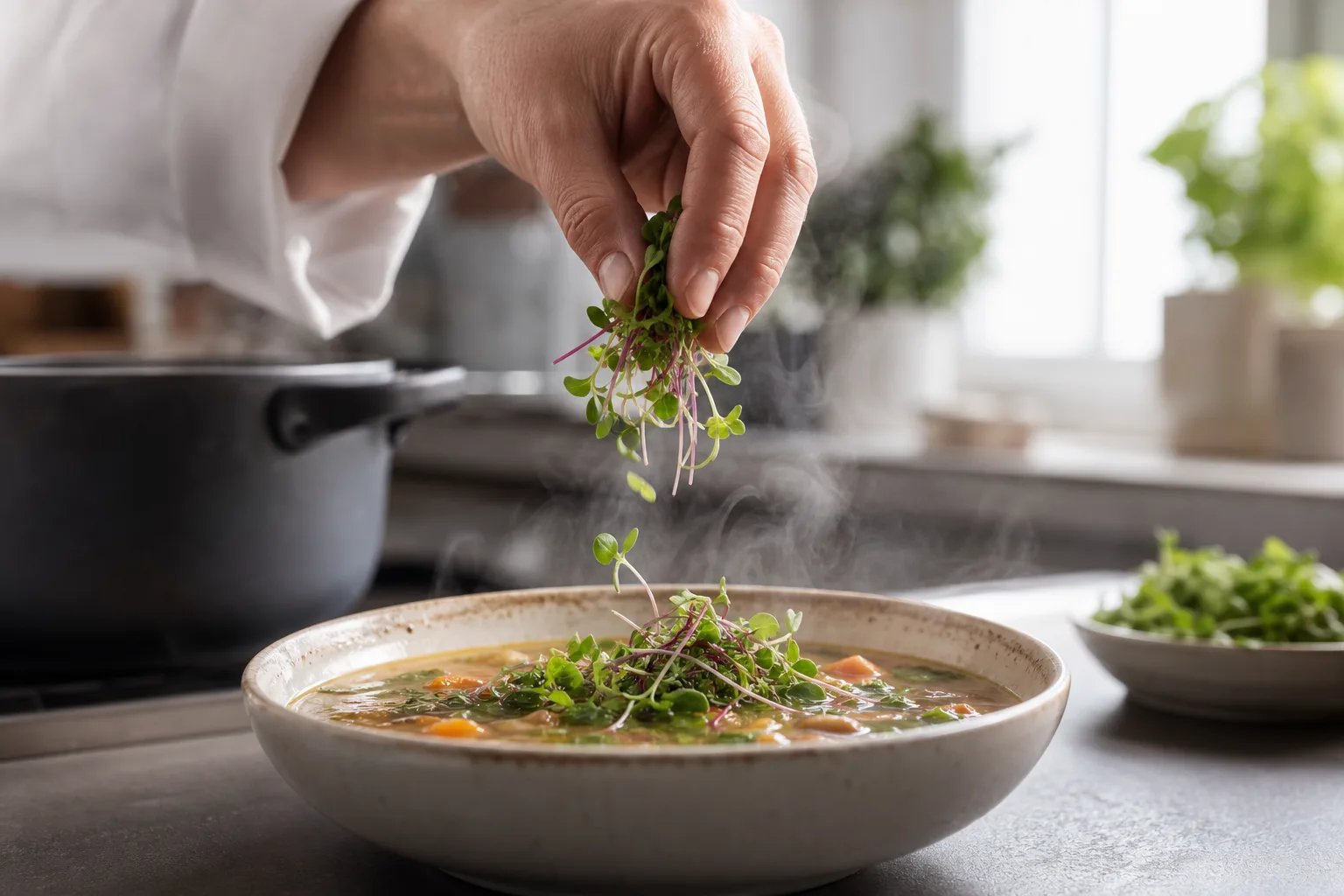
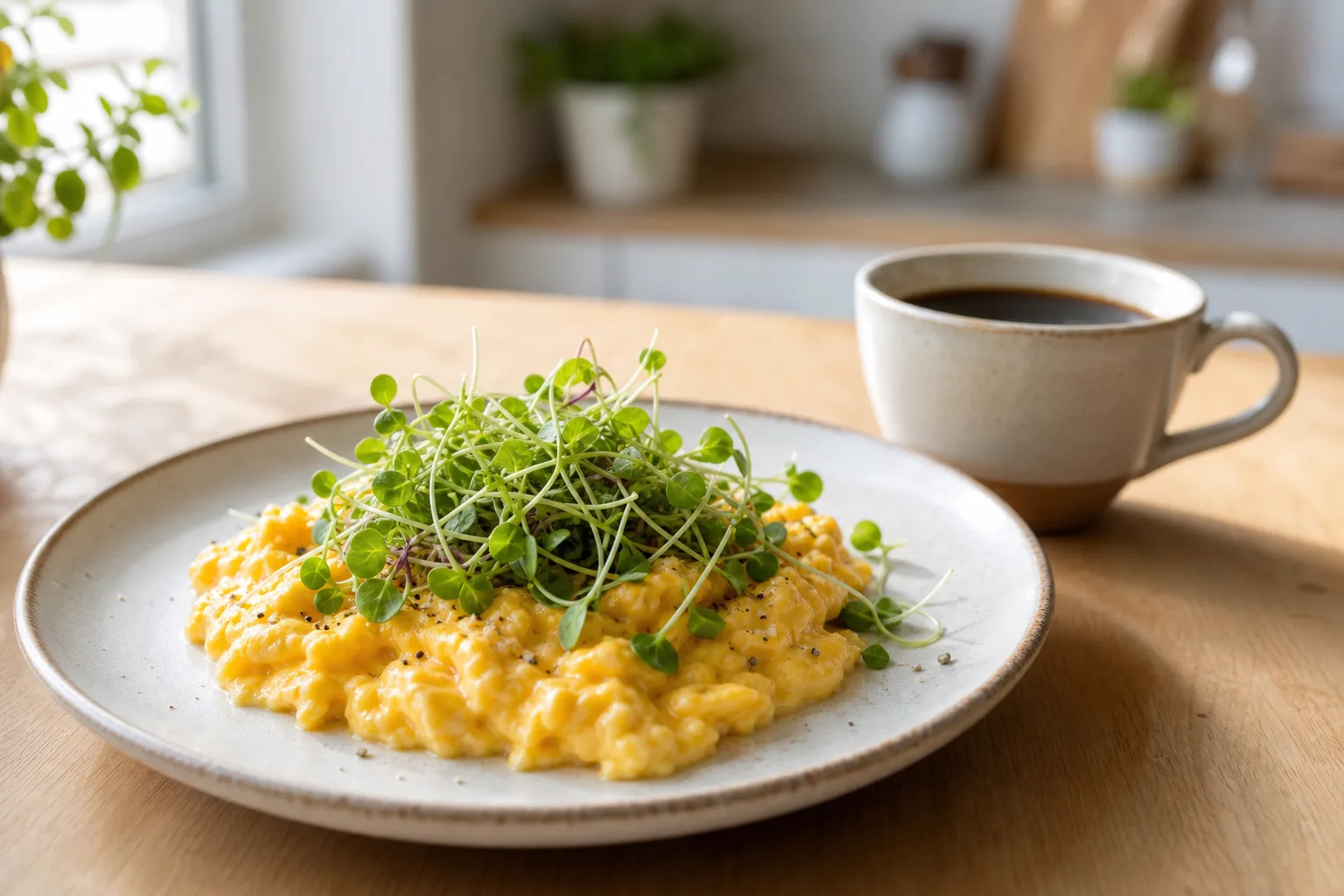
So the rhythm is always the same: cook your eggs, plate them, then crown them with microgreens. The residual warmth softens the greens just slightly, which is lovely, without cooking the life out of them. We go deeper on this in our guide to cooking with microgreens and heat, but for breakfast the rule is simple enough to remember half-asleep.

Scrambles and omelets: the everyday wins
Scrambled eggs are the lowest-effort entry point. Cook them how you like them, soft and slow or quick and firm, slide them onto the plate, and scatter a generous pinch of microgreens across the top. Pea shoots bring a sweet, fresh-from-the-garden taste. Radish brings heat. Broccoli microgreens add a mild, slightly bitter edge along with sulforaphane, the compound that makes broccoli microgreens so well studied.
Omelets give you a second option: you can both fill and finish. Fold a thin layer of greens into the omelet just before you close it, where the residual heat barely touches them, then pile more fresh ones on top once it is on the plate. The inside layer melts into the eggs, the outside layer stays bright and crisp. It is a small move that makes a diner-style omelet look like something from a brunch menu.
A few pairings that work especially well:
| Microgreen | Flavor | Best egg dish | Why it works |
|---|---|---|---|
| Pea shoots | Sweet, fresh | Soft scramble | Mild sweetness balances rich eggs |
| Radish | Peppery, sharp | Cheese omelet | Cuts through fat and salt |
| Broccoli | Mild, slightly bitter | Frittata | Earthy depth plus sulforaphane |
| Sunflower | Nutty, crunchy | Breakfast bowl | Adds satisfying texture |
| Cilantro | Citrusy, bright | Huevos-style scramble | Lifts spice and tomato |
| Basil | Sweet, spicy | Tomato and egg | Classic Italian pairing |
If you are deciding which to grow or buy first, our roundup of easiest microgreens to grow and the microgreens flavor profiles guide will help you match taste to dish.
Frittatas: bake it, then top it
A frittata is the move when you are feeding more than one person or want leftovers for the week. You whisk eggs with whatever you have, pour into an oven-safe pan, and bake until set. Because it spends real time in the oven, the same rule applies even more firmly: keep your microgreens out of the batter.
The good news is a frittata practically begs to be garnished. Once it comes out of the oven and rests for a few minutes, a fresh layer of greens across the top turns a humble egg bake into a centerpiece. The warm surface gently relaxes the leaves without scorching them. Slice it into wedges, and every piece gets a tuft of color.
This is also where mixing varieties pays off. A blend of radish, pea, and a little amaranth for its red leaves gives you the "eat the rainbow" effect on a single plate. Different colors often signal different pigments and nutrients, which is part of why variety on the plate is worth chasing.
Breakfast bowls: build it cold, finish it green
If eggs are not your only breakfast, microgreens slot beautifully into bowls. Think a base of grains or roasted potatoes, a soft poached or jammy egg, some avocado, maybe a spoon of yogurt or beans, and then a big, confident handful of greens on top. Because nothing in the bowl needs the greens to be cooked, you get them at their freshest and most nutritious.
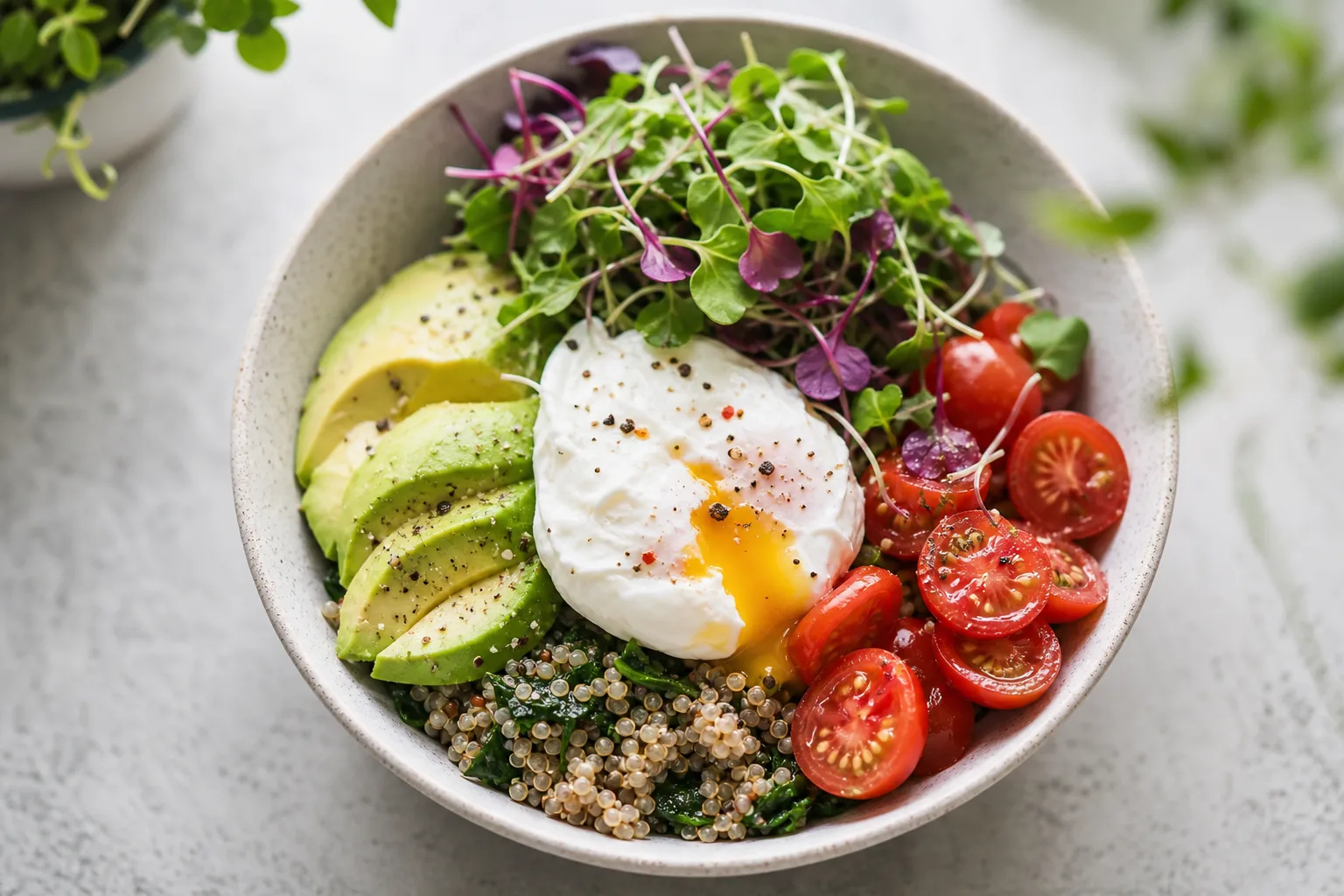
Sunflower shoots are the standout here. They have a satisfying crunch and a nutty taste that holds up against creamy avocado and a runny yolk. Add pea shoots for sweetness and a few radish greens for a peppery kick, and you have a bowl with three distinct textures. If a smoothie is more your speed on busy mornings, microgreens disappear into one without changing the taste much, and our microgreens smoothie recipes cover how to do it well.
Here is a rough sense of what a small handful adds to a typical egg breakfast. Numbers are approximate and vary by crop, but they show the direction of travel.
| Breakfast | Approx. calories added by greens | What you gain |
|---|---|---|
| Two scrambled eggs + 1/2 cup microgreens | ~5–10 kcal | Vitamin C, K, color, crunch |
| Frittata wedge + 1/4 cup microgreens | ~3–5 kcal | Antioxidants, fresh flavor |
| Grain bowl + 1 cup mixed microgreens | ~10–15 kcal | Fiber boost, variety of pigments |
The takeaway is that you are adding a lot of nutrition and almost no calories. For more ways to use them across the day, how to eat microgreens is a good companion read.
Keeping them fresh enough to actually use
The honest reason most people fail at this is freshness. Store-bought microgreens often arrive several days old, wilt fast in the fridge, and turn slimy before you finish the clamshell, which is exactly why they can feel expensive and disappointing. A great breakfast habit needs greens that are ready the moment you crack the eggs.
That is the gap a countertop grower like Luya is built to close. It grows microgreens automatically right on your counter, so you snip what you need straight onto your plate, at peak freshness, every morning. No clamshell, no slime, no last-minute dash to the store. If you would rather grow them the manual way, our how to grow microgreens at home guide covers the basics, including how to avoid the molding problems that trip up beginners.
A simple morning to try tomorrow
You do not need a recipe to start. Tomorrow, scramble your usual eggs, take them off the heat, slide them onto the plate, and top with a pinch of whatever microgreens you have. That is the entire technique. The flavor lift is immediate, the nutrition is real, and the only new habit is reaching for the greens before you sit down.
From there, the variations are endless: fold them into omelets, crown a frittata, build a bowl. The rule never changes. Cook first, add greens after, keep them raw, and let those tiny leaves do their outsized work. It is the easiest upgrade your breakfast will ever get.