This article is for general education and is not medical advice. Talk to your doctor before changing your diet for a health condition or if you take medication.
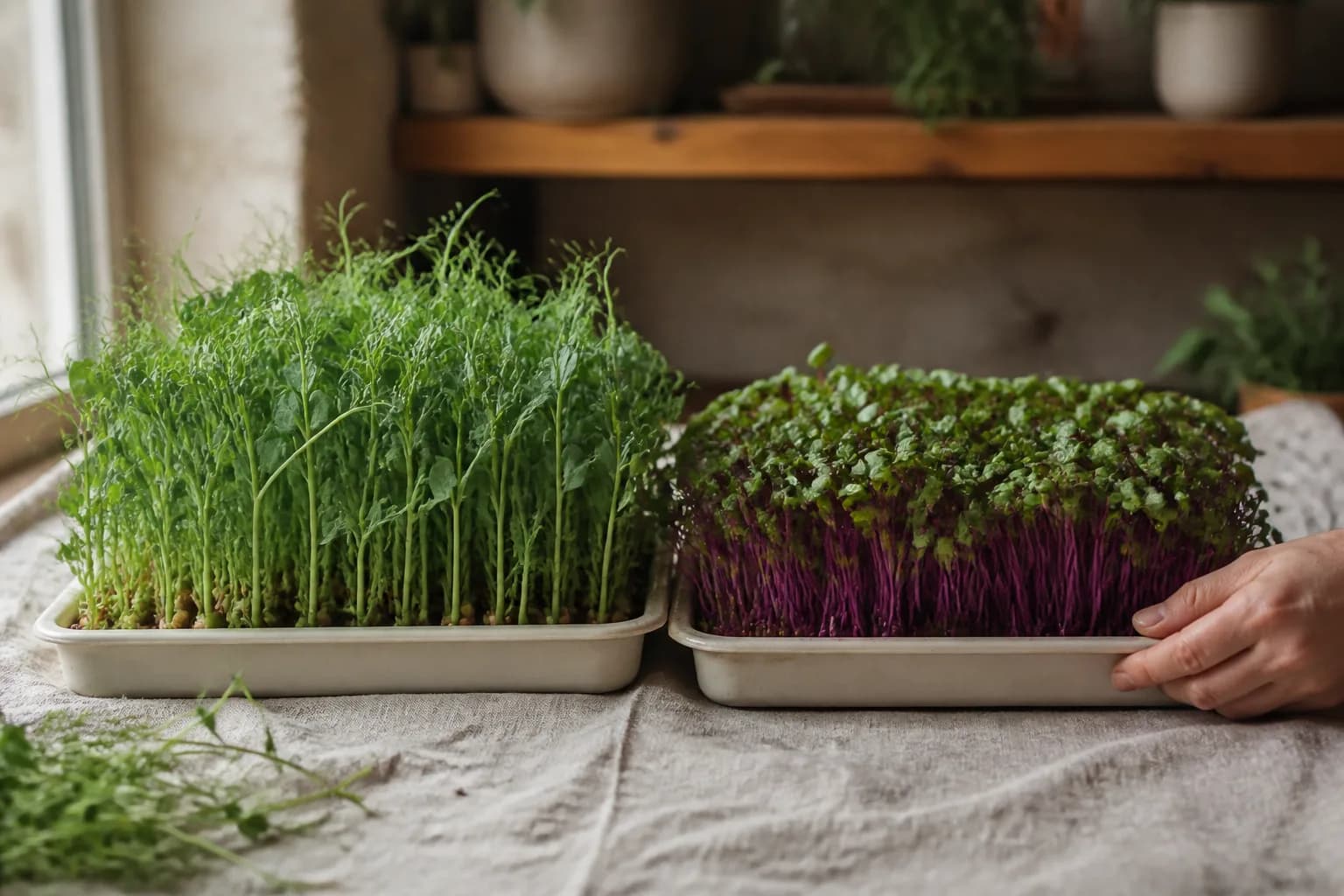
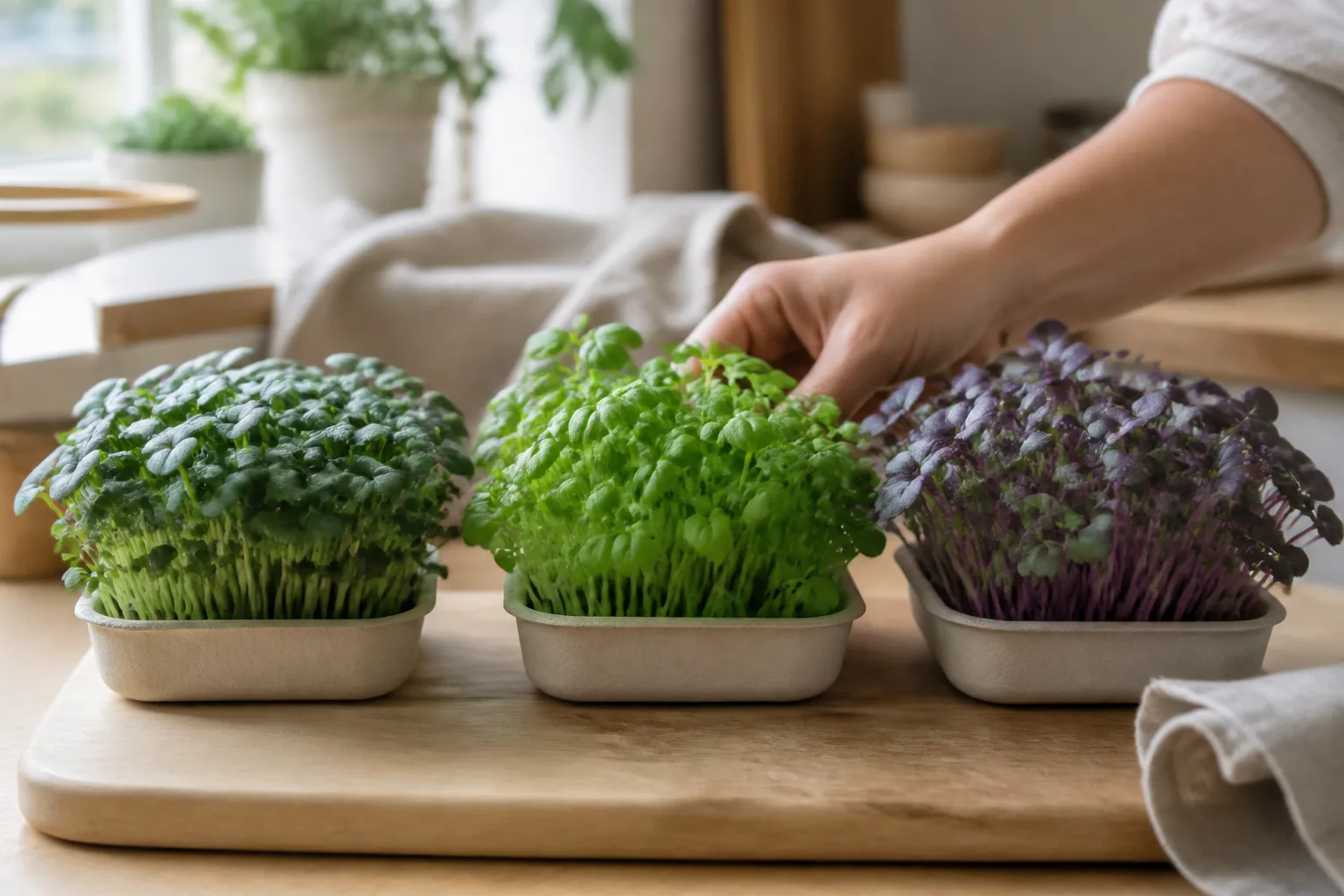
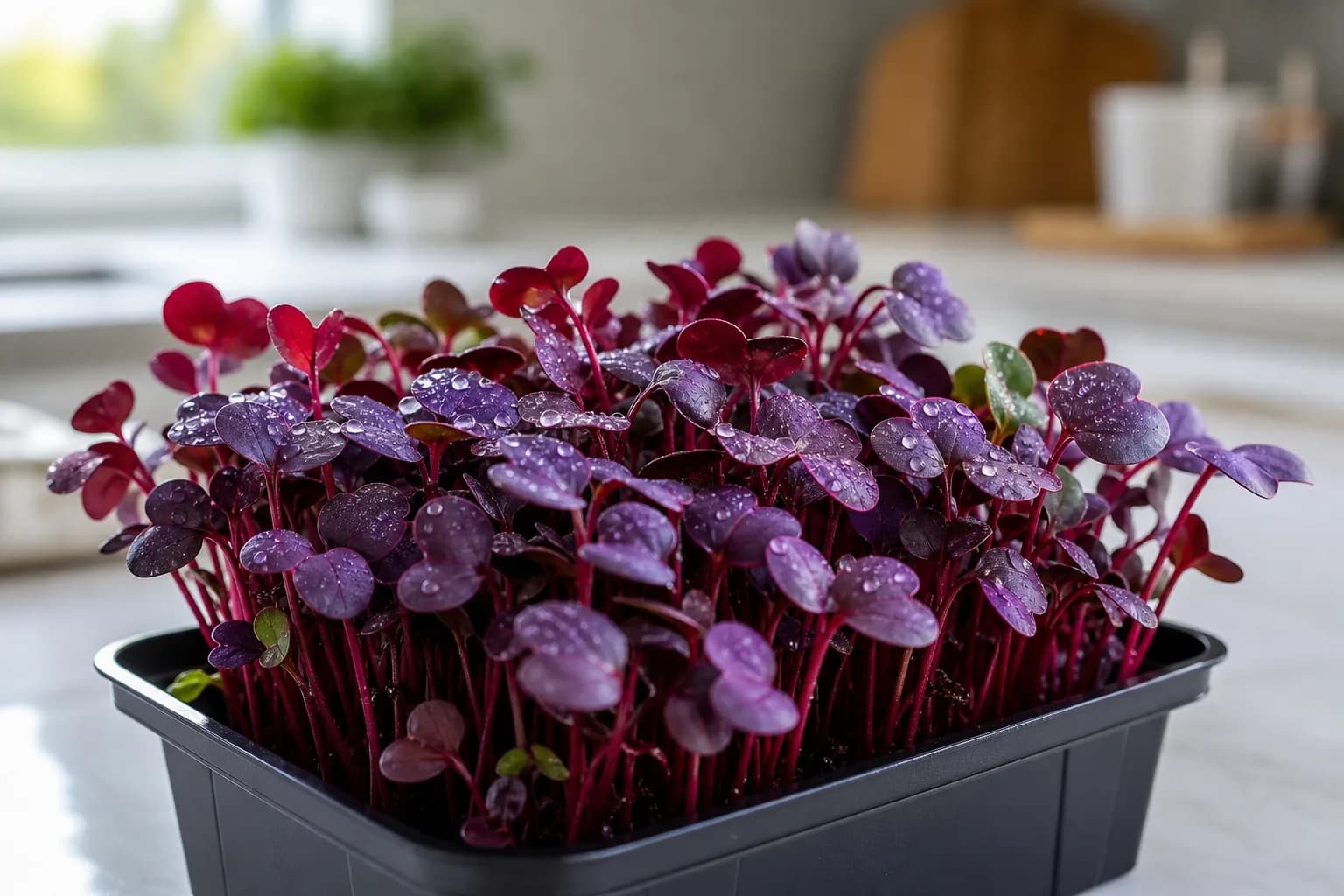
Have you ever wondered why a tray of red cabbage microgreens can range from pale pink to an almost electric purple? Or why amaranth shoots glow like stained glass while a milder green crop stays, well, green? The answer lives in a family of pigments called anthocyanins. They are the same compounds that paint blueberries, red grapes, and autumn leaves, and microgreens often pack them in at surprising levels. Better still, the color isn't fixed. The way a plant is grown, especially how it's lit, can push those pigments up or down. That makes anthocyanins one of the most interesting and most controllable nutrients in the whole microgreen world.
What anthocyanins actually are
Anthocyanins belong to a larger group of plant compounds called flavonoids, which in turn sit inside an even bigger category known as secondary metabolites. The "secondary" part is worth unpacking. A plant doesn't strictly need these molecules to grow, sprout, or photosynthesize. Instead, it makes them on demand, usually in response to its environment, as a kind of chemical toolkit for defense and protection.
Anthocyanins are the part of that toolkit responsible for red, purple, and blue coloring in leaves, stems, fruits, and flowers. In the living plant they do real work. They act as a built-in sunscreen, absorbing excess light and shielding delicate tissue from damage. They also mop up reactive oxygen species, the unstable molecules that build up when a plant is stressed. In other words, a richly purple microgreen is often a plant that has been quietly defending itself, and the pigment is the visible evidence.
Why people care about them nutritionally
The same antioxidant behavior that protects the plant is what draws nutrition researchers to anthocyanins. As dietary compounds, they are studied for their role in fighting oxidative stress, which is the cellular wear-and-tear linked to aging and many chronic conditions. Diets naturally high in colorful fruits and vegetables, and therefore high in anthocyanins, are consistently associated with positive outcomes for heart and metabolic health.
Microgreens are a compelling way to get them because the pigments are concentrated in young, fast-growing tissue. A small handful of vivid red or purple shoots can deliver a meaningful dose of color compounds without much volume on the plate. If you want the broader picture of how these tiny greens stack up nutritionally, our overview of microgreens nutrition is a good companion read, and are microgreens good for you tackles the health question head-on. Anthocyanins are one piece of a bigger antioxidant story that also includes compounds like sulforaphane in brassica crops.
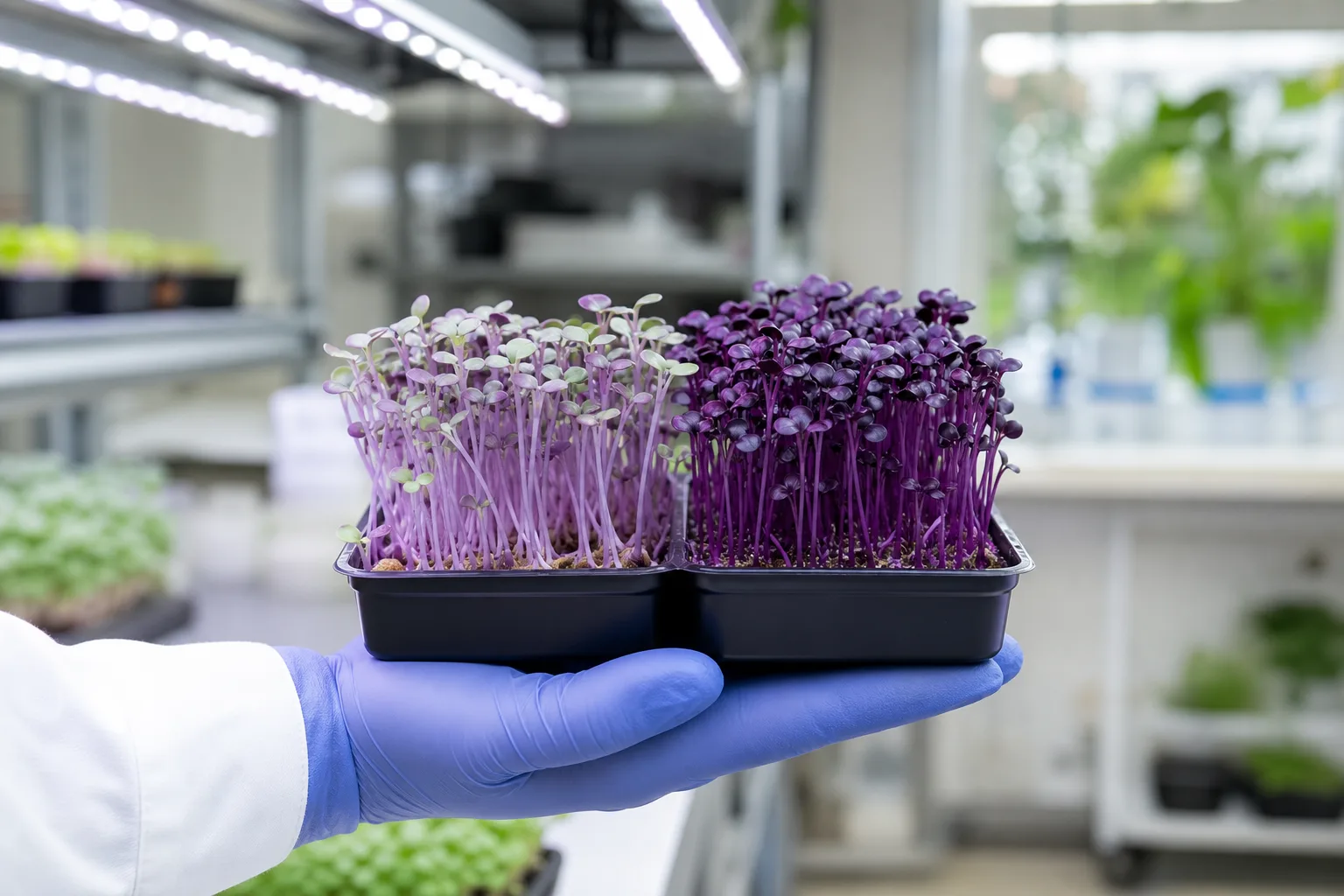
Which microgreens are richest in anthocyanins
Not every microgreen is a strong anthocyanin producer. The pigments tend to show up most in crops that are naturally inclined toward red or purple coloring, and in plant families that lean on anthocyanins for stress protection. Here is a rough guide to where the color concentrates.
| Microgreen | Typical color | Anthocyanin level | Notes |
|---|---|---|---|
| Red cabbage | Magenta stems, green leaves | High | A reliable, beginner-friendly purple producer |
| Red amaranth | Deep crimson throughout | Very high | One of the most pigment-dense options |
| Purple radish | Purple stems, peppery leaves | High | Color intensifies with light exposure |
| Red kale | Reddish-purple veins | Moderate to high | Also brings brassica compounds |
| Basil (purple types) | Violet leaves | Moderate | Slower to grow but visually striking |
| Sunflower | Pale green | Low | Grown for crunch and nutty flavor, not color |
If you're choosing crops specifically for color, red amaranth and red cabbage are the dependable stars. You can read more about the brassica family's perks in our guides to broccoli microgreens and radish microgreens. And if the color of a microgreen also hints at how it might taste, our piece on microgreens, color, and taste connects those dots.
How light drives the color
Here is where it gets genuinely fascinating. Anthocyanin production is largely switched on by light, and different wavelengths flip different switches. The plant senses specific colors of light through dedicated receptor proteins, which then activate the genetic machinery that builds pigment.
Ultraviolet light is the strongest trigger. When a plant detects UV, a receptor called UVR8 activates a master regulator known as HY5, which turns on the key pigment-building enzymes in what's called the phenylpropanoid pathway. The plant essentially reads UV as a threat and responds by laying down protective anthocyanins. Blue light works through different receptors but lands on similar regulators, ramping up flavonoids and anthocyanins alongside the antioxidant defenses. Red light, sensed by phytochromes, also nudges pigment genes upward and can work together with the plant's hormone signals to deepen color.
The takeaway for anyone growing at home is simple: more of the right light usually means more color. This is also why the same seed can produce a pale crop on a dim windowsill and a vivid one under a good grow light. To go deeper on the spectrum side, see light and microgreen nutrition, and for the specific wavelengths, our notes on blue light for microgreens and UV light for microgreens.
Light intensity, timing, and temperature
Wavelength is only part of the picture. How bright the light is, how long it shines, and how warm the room sits all shape the final color.
Within a healthy range, brighter light gives the plant more energy to build pigments, so anthocyanin levels tend to climb as intensity rises. Push too far, though, and very high light becomes a stressor that can damage the plant's photosynthetic machinery and actually backfire. Low light has the opposite problem: a dim crop simply doesn't make much pigment, which is why a shaded windowsill so often yields washed-out greens instead of bold purples. Several studies have shown crops literally shifting from purple back to green when light drops too low.
Day length matters too. The plant's internal clock tracks how many hours of light it gets, and longer light periods can stack up more pigment over a grow cycle. Temperature plays a quieter but real role, since cooler conditions tend to favor anthocyanin accumulation, which is part of why autumn leaves redden as nights turn cold.
| Growing factor | Effect on anthocyanins | Practical tip |
|---|---|---|
| Light intensity | Higher within limits boosts color; excess stresses the plant | Use a bright, steady grow light, not harsh blasts |
| Light spectrum | UV and blue strongly induce pigment | Full-spectrum or blue-rich light deepens color |
| Day length (photoperiod) | Longer light periods can raise totals | Consistent daily light beats erratic exposure |
| Temperature | Cooler conditions often favor pigment | Avoid hot, stuffy growing spots |
The trick is that these levers interact. A bright light on a crop kept too warm won't perform like the same light in a cooler room. Getting the balance right by hand takes practice, which is one reason a managed system like Luya tunes light and climate automatically for each crop, so the conditions that favor color happen without you babysitting the tray. If you'd rather dial it in yourself, how to grow microgreens at home covers the fundamentals.
Getting the most color on your plate
A few habits make a real difference. Choose pigment-rich varieties from the start, since you can't coax deep purple out of a crop that isn't built for it. Give them generous, consistent light through the growing days rather than a gloomy corner. Keep the space comfortably cool. And harvest at the right moment, when the stems and leaves have reached their fullest color, because the pigment continues developing as the seedling matures.
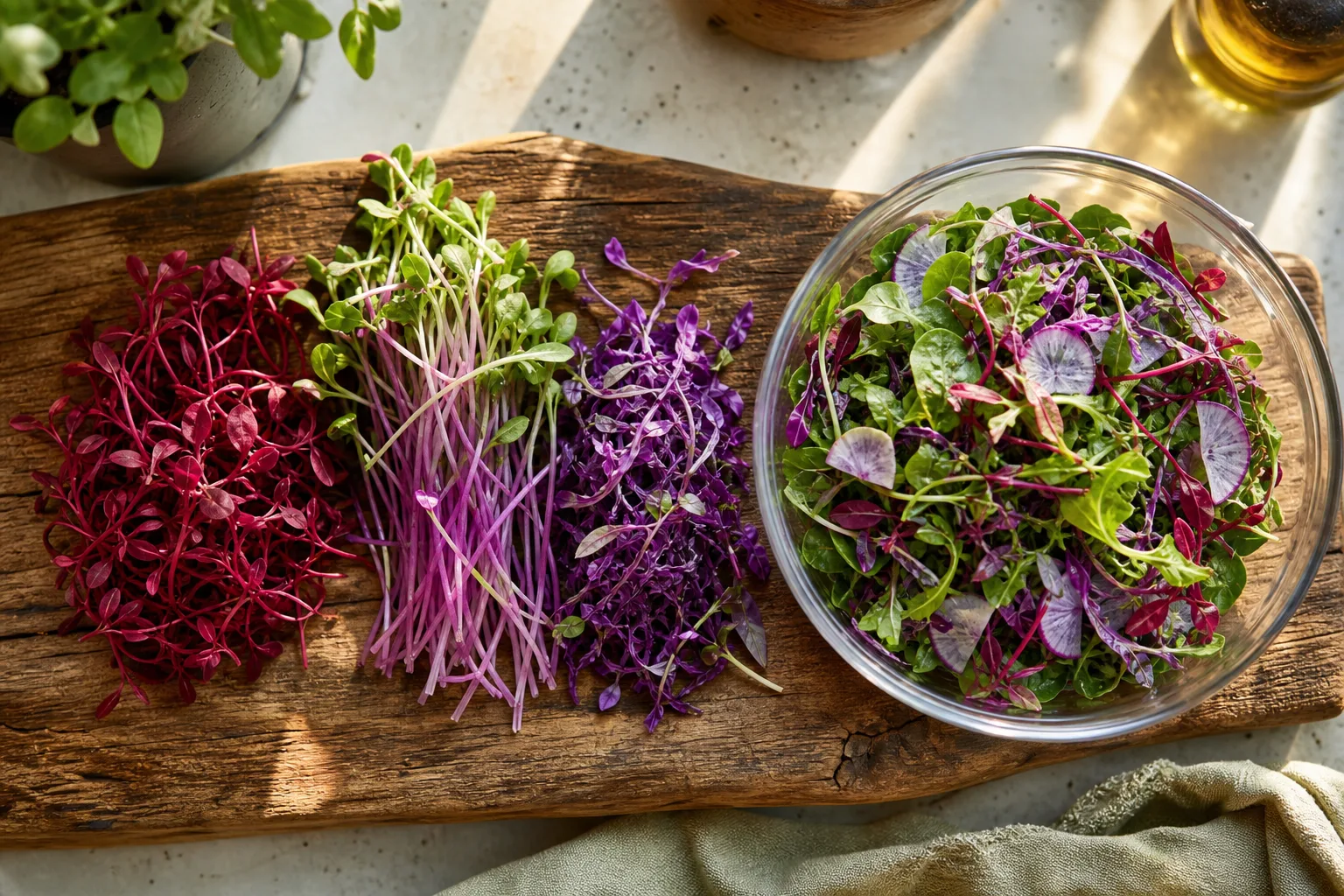
Once harvested, treat anthocyanins gently. They're water-soluble and sensitive to prolonged heat, so the best way to preserve them is to eat the greens fresh and raw, scattered over a finished dish rather than cooked into it. Our microgreens salad ideas are a natural fit, and if you like a colorful blend, mixing a few red and purple crops makes for a plate that's as nutritious as it is photogenic.
The bottom line
Anthocyanins are the reason some microgreens blaze red and purple, and that color is more than decoration. It signals a concentration of antioxidant pigments the plant built to protect itself, and that we get to enjoy when we eat them. Because the plant makes these compounds in response to its environment, the color is something you can influence: pick the right varieties, give them bright and well-balanced light, keep things cool, and harvest at peak. Do that, and the deep hue in your tray is a pretty good sign that the nutrition is there too.
References
- Effect of Different Ratios of Blue and Red LED Light on Brassicaceae Microgreens under a Controlled Environment. Plants (Basel). 2021;10(4):801. https://doi.org/10.3390/plants10040801