This article is for general education only and is not medical advice. Talk to a qualified clinician before changing your diet, supplements, or routine — especially if you have a health condition, are pregnant, or take medication.
If you optimize sleep, track your glucose, and read ingredient labels like a forensic analyst, microgreens belong on your shortlist. The case for microgreens longevity is not built on hype — it rests on measurable nutrient density and a handful of well-studied plant compounds. These tiny seedlings, harvested days after germination, often carry two to three and a half times the nutrients of their full-grown versions, gram for gram. That is a rare thing in nutrition: more upside from less volume on the plate.
This guide walks through what the research actually shows, where the data is strong, and where it is still early. No miracle claims — just the levers worth pulling, and the honest caveats on each one.
Why microgreens punch above their weight for longevity
A microgreen is a vegetable harvested in its first true-leaf stage, usually 7 to 14 days after planting — distinct from a sprout, which is eaten earlier, seed and all (we compare them in microgreens vs. sprouts). At that early stage, the seedling is still living off a dense, concentrated reserve of the compounds it needs to grow. You eat that reserve before it dilutes into the water and fiber of a larger mature plant.
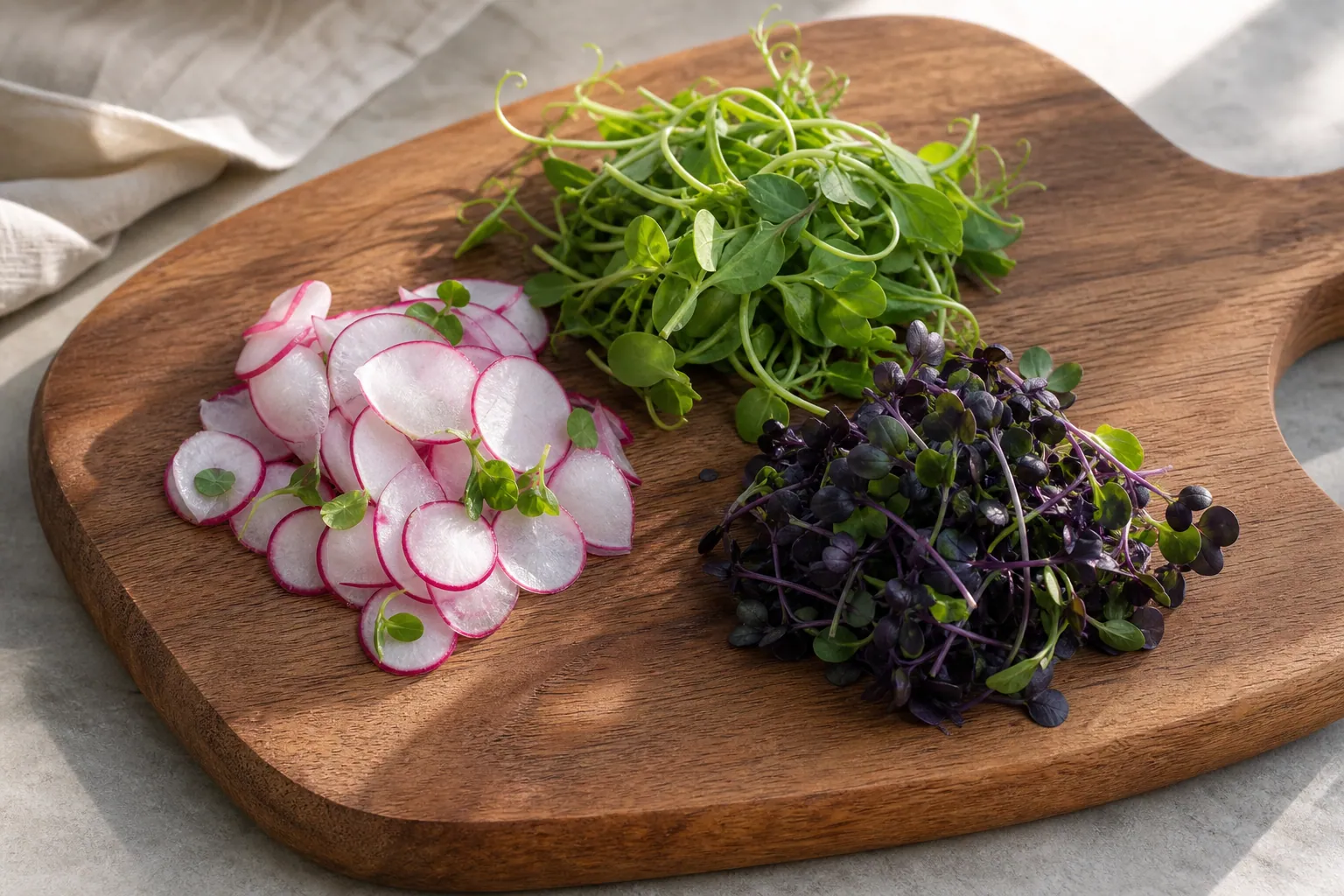
Peer-reviewed reviews (MDPI Plants) and USDA composition data point to microgreens being roughly 2 to 3.5x more nutrient-dense than their mature counterparts, with radish microgreens often topping the charts. They tend to be rich in vitamins C, K, and E, plus the antioxidants and polyphenols that longevity-focused eaters already chase. The practical takeaway: a small handful folded into a meal delivers a disproportionate share of those micronutrients without adding bulk or calories.
For a deeper breakdown of the vitamin and mineral profile, see our guide to microgreens nutrition.
The longevity compounds inside the leaf
Nutrient density is the headline, but biohackers usually want the molecule-level detail. Here are the compounds worth understanding, and what the evidence does — and does not — support.
Sulforaphane (broccoli microgreens)
Sulforaphane is the most studied compound in this category. It is an isothiocyanate that does not exist pre-formed in the intact plant. Instead, it appears when glucoraphanin (a storage molecule) meets the enzyme myrosinase — a reaction triggered the moment you chew or chop the leaf. Once absorbed, sulforaphane activates the body's Nrf2 pathway, a master regulator that switches on the cell's own antioxidant and detoxification machinery rather than acting as an antioxidant directly.
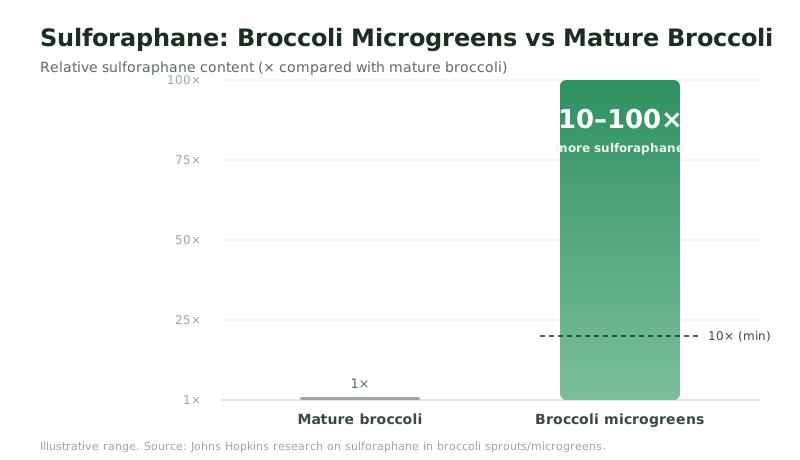
Johns Hopkins research found that broccoli sprouts and microgreens can carry roughly 10 to 100x more glucoraphanin (the sulforaphane precursor) than mature broccoli — though the finished sulforaphane you actually get varies widely by variety, growing conditions, and harvest timing. Sulforaphane is being investigated for blood-sugar regulation, inflammation, and cellular defense — see our deep dives on microgreens and blood sugar and microgreens and inflammation. Treat all of it as research-stage science, not proof of any cure.
Two practical levers determine how much sulforaphane you actually get. First, heat degrades myrosinase, so steaming or sautéing can blunt sulforaphane formation — raw and fresh wins. Second, chewing thoroughly physically drives the glucoraphanin-myrosinase reaction. Our guide on how to maximize sulforaphane goes deeper on technique, including why fresh microgreens often beat sulforaphane supplements.
Plant protein (pea shoots)
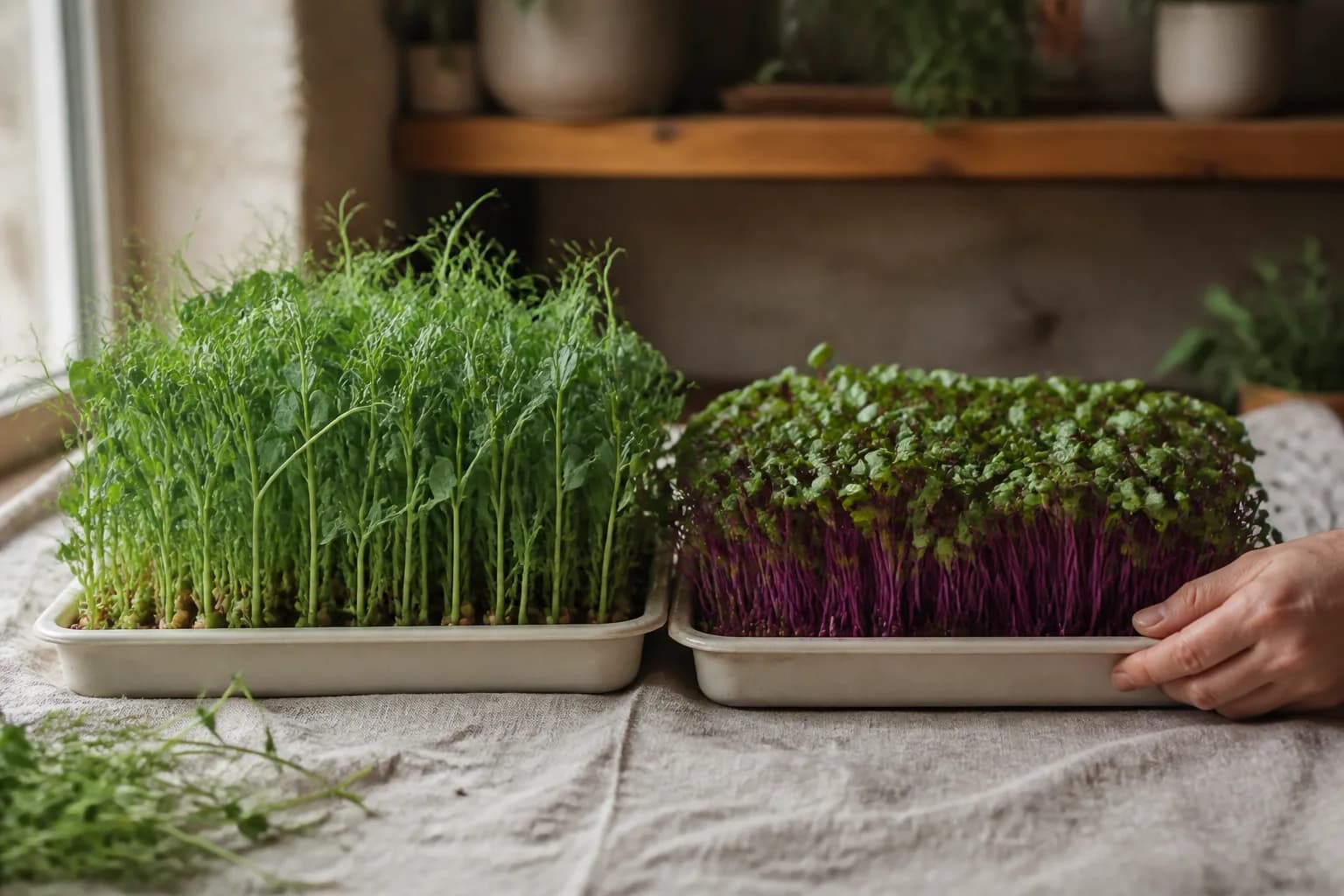
Pea shoots are a quietly impressive protein source — one of the more protein-dense microgreens — making them one of the stronger plant-based options in the microgreen world. For anyone leaning on plant protein, that density matters: it stacks micronutrients and amino acids in the same bite, which is exactly the kind of double-duty food a longevity diet rewards.
Early cardiometabolic signals (red cabbage microgreens)
A USDA mouse study on red cabbage microgreens lowered LDL and liver cholesterol (and inflammatory markers) in mice on a high-fat diet, alongside reduced weight gain. The important caveat: this is animal and early-stage research, not human proof. Mouse metabolism is not human metabolism, and a promising rodent signal frequently fails to replicate in people. Read it as a reason to keep red cabbage microgreens in the rotation, not as a clinical claim — more in microgreens and cholesterol.
| Microgreen | Standout compound | What the data shows | Evidence stage |
|---|---|---|---|
| Broccoli | Sulforaphane precursor | 10–100x the glucoraphanin of mature broccoli | Lab + human research |
| Pea shoots | Plant protein | A strong plant-based protein source | Compositional data |
| Red cabbage | Polyphenols | Lower LDL and liver cholesterol (mouse study) | Animal / early |
| Radish | Mixed nutrients | Often highest overall density | Compositional data |
How to build microgreens into a longevity routine
The compounds only matter if the greens are genuinely fresh and you eat them consistently. Two real-world obstacles get in the way, and both are worth naming honestly before you commit.
Buying them is expensive, and the freshness is already gone. Store clamshells run about $4 to $6 per 2 oz — roughly $30 to $50 per pound — and by the time they reach you they have spent days in the farm-to-truck-to-warehouse-to-store pipeline. They wilt fast, carry a short shelf life, and generate a lot of waste; the half you don't use in three days often goes slimy. We unpack the economics in why store-bought microgreens are expensive and not fresh.
Growing them by hand is a consistency problem. The three classic failure modes are mold (from moisture, poor airflow, overcrowding, and warmth), mess (soil scattered across the counter), and maintenance (daily watering and attention across roughly 10-day cycles). Miss a few days for travel or one busy week and the tray dies. Manual growing has a genuine failure rate — it is rarely a knowledge problem and almost always a consistency one. See why microgreens keep molding if you have hit that wall.
If you want the nutrition without the chore or the spend, start with forgiving crops. These four germinate fast and tolerate beginner mistakes:
| Crop | Germination | Harvest | Why biohackers like it |
|---|---|---|---|
| Radish | 1–2 days | 5–7 days | Fastest, highest density |
| Pea shoots | 2–3 days | 8–12 days | High protein |
| Broccoli | 2–3 days | 8–10 days | Sulforaphane |
| Sunflower | 2–3 days | 7–10 days | Crunchy, filling |
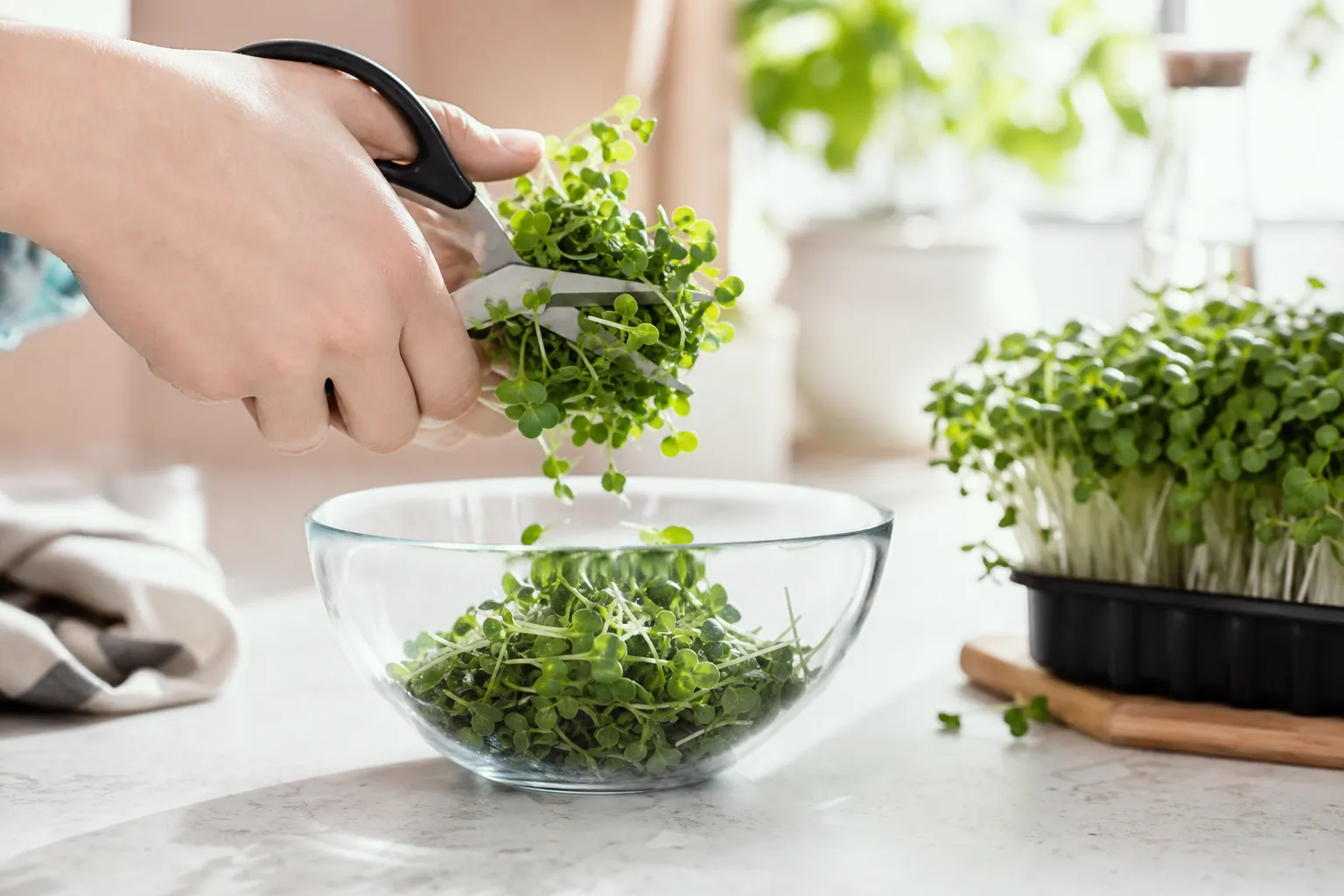
A simple weekly protocol: rotate a fast crop like radish with a sulforaphane crop like broccoli, harvest right before eating, keep them raw, and chew thoroughly so the myrosinase reaction actually fires. Toss a small handful onto eggs, into a salad, or over a finished bowl — heat from a hot dish is fine on contact, but don't cook them in. If you want the full picture on whether these greens earn their reputation, read are microgreens good for you.
The honest bottom line
Microgreens are a legitimate, evidence-supported addition to a longevity-minded diet — dense in nutrients, rich in studied compounds like sulforaphane, and easy to fold into meals raw. They are not a magic pill, and the strongest cardiometabolic data is still early or animal-based. The real, repeatable value comes from two things that are stubbornly hard to maintain: freshness and consistency. Lose either, and you are paying for wilted greens or composting dead trays.
That gap is the problem Luya was built to close. Our countertop "food computer" grows pre-seeded trays inside a sealed, climate-controlled, ventilated chamber — AI-managed temperature, automatic watering, and an airflow design that keeps mold out — so there is no soil mess and no daily chore. You harvest living greens seconds before they hit your plate, at a lower cost per serving than the store, and the rest keep growing. Think of it as a Nespresso, but for greens.
Curious which crop to start with? See our roundup of the easiest microgreens to grow.
Selected sources
- Johns Hopkins Medicine — research on sulforaphane and broccoli sprouts (hopkinsmedicine.org)
- USDA — microgreen nutrient composition and red cabbage microgreen research (usda.gov)
- MDPI Plants — peer-reviewed reviews on microgreen nutrient density (mdpi.com)
- National Institutes of Health / PMC — Nrf2 pathway and isothiocyanate studies (ncbi.nlm.nih.gov)
- Cleveland Clinic — general nutrition guidance (clevelandclinic.org)
- Healthline — consumer health overviews (healthline.com)
References
- Xiao Z, Lester GE, Luo Y, Wang Q. Assessment of Vitamin and Carotenoid Concentrations of Emerging Food Products: Edible Microgreens. J Agric Food Chem. 2012;60(31):7644–7651. https://doi.org/10.1021/jf300459b
- Fahey JW, Zhang Y, Talalay P. Broccoli sprouts: an exceptionally rich source of inducers of enzymes that protect against chemical carcinogens. PNAS. 1997;94(19):10367–10372. https://doi.org/10.1073/pnas.94.19.10367
- Huang H, Wang TTY, et al. Red Cabbage Microgreens Lower Circulating LDL, Liver Cholesterol, and Inflammatory Cytokines in Mice Fed a High-Fat Diet. J Agric Food Chem. 2016;64(48):9161–9171. https://doi.org/10.1021/acs.jafc.6b03805
- Kyriacou MC, Rouphael Y, Di Gioia F, et al. Micro-scale vegetable production and the rise of microgreens. Trends Food Sci Technol. 2016;57:103–115. https://doi.org/10.1016/j.tifs.2016.09.005