Some microgreens announce themselves. A pinch of radish or mustard will light up your tongue with heat, and that's exactly why people who love them love them. But not everyone wants their greens to fight back. If you're feeding picky kids, easing a skeptical partner into the idea, or simply growing your very first tray, you want the crops that taste good without any convincing. That's where the mild, sweet, nutty, crunchy family comes in—led by sunflower shoots and pea shoots.
These are the crowd-pleasers. They read more like a fresh snack than a "health food," and their texture does half the work: crisp, juicy, substantial enough to feel like real food rather than a delicate garnish. In a fall 2023 sensory study, a trained tasting panel evaluated a dozen micro and baby greens and found that pea shoots stood out as one of four distinct flavor archetypes—the sweet, fresh, gentle counterpoint to all the peppery and bitter options. If you've been scared off microgreens by one mouth-searing bite of something spicy, this is the group to start with.
What "Nutty and Sweet" Actually Tastes Like
Flavor words get thrown around loosely, so let's be specific. In the sweet-and-nutty category, two crops do most of the heavy lifting, and they're not the same.
Sunflower microgreens taste nutty, hearty, and faintly green, with a satisfying snap. People often compare them to raw sunflower seeds or fresh peas crossed with a tender lettuce. The stems are thick and crunchy; the leaves are mild. There's almost no bitterness and zero heat, which is exactly why they disappear into a kid's lunchbox without complaint.
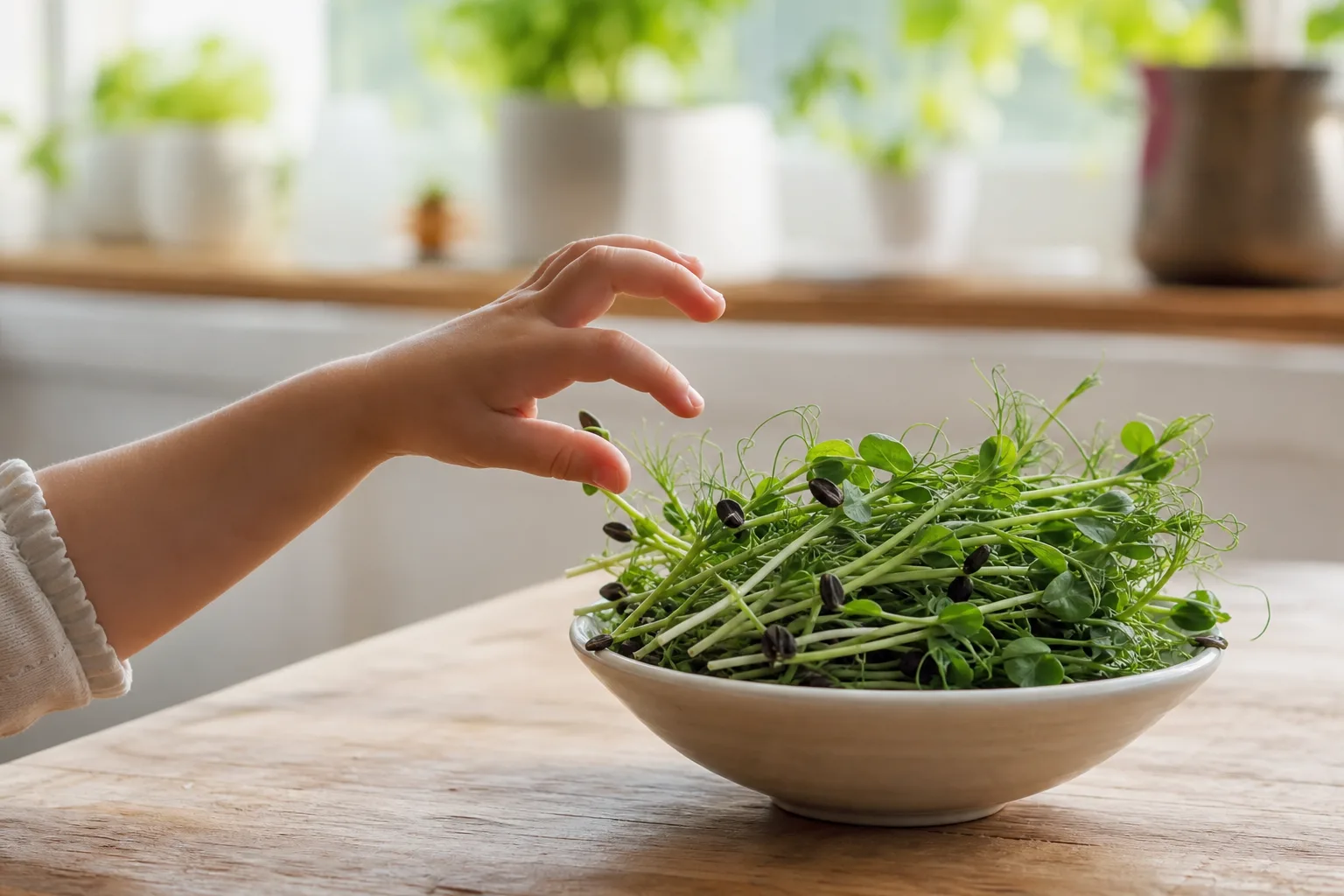
Pea shoots lean sweet and fresh—imagine the first bite of a raw sugar snap pea, but in leaf form. They're juicy, springy, and clean-tasting, with a delicate vine-like crunch. The panel that tasted them reached for words like sweet, fresh, and crisp far more than anything sharp or astringent.
Together they cover a comforting middle of the flavor map: nothing challenging, nothing you need to "get used to." If you want the full spectrum—from this gentle corner all the way out to the fiery stuff—our microgreens flavor profiles guide lays out the whole landscape, and if you're curious why some greens taste sharp instead, see why do microgreens taste bitter.
A Quick Flavor and Texture Reference
Here's how the mild crowd compares, alongside a couple of bolder crops for context. Use it to pick what fits your meal—and your audience.
| Microgreen | Flavor | Texture | Heat level | Best for |
|---|---|---|---|---|
| Sunflower | Nutty, hearty, mild | Thick, crunchy, juicy | None | Kids, snacking, bulk in bowls |
| Pea shoots | Sweet, fresh, green | Crisp, springy, tender | None | Stir-fries, salads, sandwiches |
| Broccoli | Mild, slightly green | Soft, fine | Very low | Easing into microgreens |
| Cabbage | Mild, faintly sweet | Tender, delicate | None | Slaws, color |
| Radish | Peppery, sharp | Crisp | High | Flavor lovers, tacos |
The takeaway: if "no heat, big crunch" is the goal, sunflower and pea shoots win. Broccoli and cabbage are gentle backups when you want something softer and finer. (For the spicier end, our spicy microgreens guide covers radish, mustard, and the rest.)
Why Kids and Beginners Reach for These First
There are real reasons these crops are the friendly on-ramp, and they're worth understanding whether you're a parent or a first-time grower.
The first is flavor forgiveness. Heat and bitterness in microgreens come largely from defense compounds—the same glucosinolates and isothiocyanates that make mustard and radish exciting to adults can read as "yuck" to a seven-year-old. Sunflower and pea simply don't carry much of that, so there's no flavor hurdle to clear.
The second is texture. Kids notice mouthfeel as much as taste, and a limp, slimy green is an instant rejection. These crops are the opposite: sturdy stems and a clean snap that feels like eating something fresh and alive. That crunch is also why they hold up well mixed into other foods instead of wilting on contact.
The third reason is purely practical for beginners: sunflower and pea are among the most forgiving crops to grow. The seeds are large, germinate vigorously, and produce a generous, fast harvest, which makes them some of the easiest microgreens to grow and a confidence-building first tray. There's something genuinely motivating about watching big, healthy shoots shoot up in a week or so—it makes you want to grow the next batch.
The Nutrition Behind the Friendly Flavor
Mild does not mean lightweight. Pea shoots are a standout source of plant protein, running notably high by weight compared with most leafy greens, along with vitamin C, folate, and vitamin A. That makes them a quiet win in a kid's meal—real nutrition that doesn't taste like a lecture. We dig into the details in pea shoots and the broader case for protein in high-protein microgreens.
Sunflower shoots bring a different kind of value: they're hearty enough to add real substance and healthy fats to a plate, with a respectable hit of vitamin E, plus minerals and fiber. Because you can pile them on without any flavor penalty, they're an easy way to bump up the green content of a meal for someone who'd never touch a salad. Across the board, microgreens tend to be dramatically more nutrient-dense than their full-grown versions—the short version is in microgreens nutrition, and the honest "is this actually good for me" answer lives in are microgreens good for you.
The practical point: with these crops you don't have to choose between "kids will eat it" and "it's good for them." You get both.
Easy Ways to Use Them (No Recipe Required)
The beauty of mild, crunchy greens is that they go almost anywhere without clashing. A few low-effort ideas that work even on a busy weeknight:
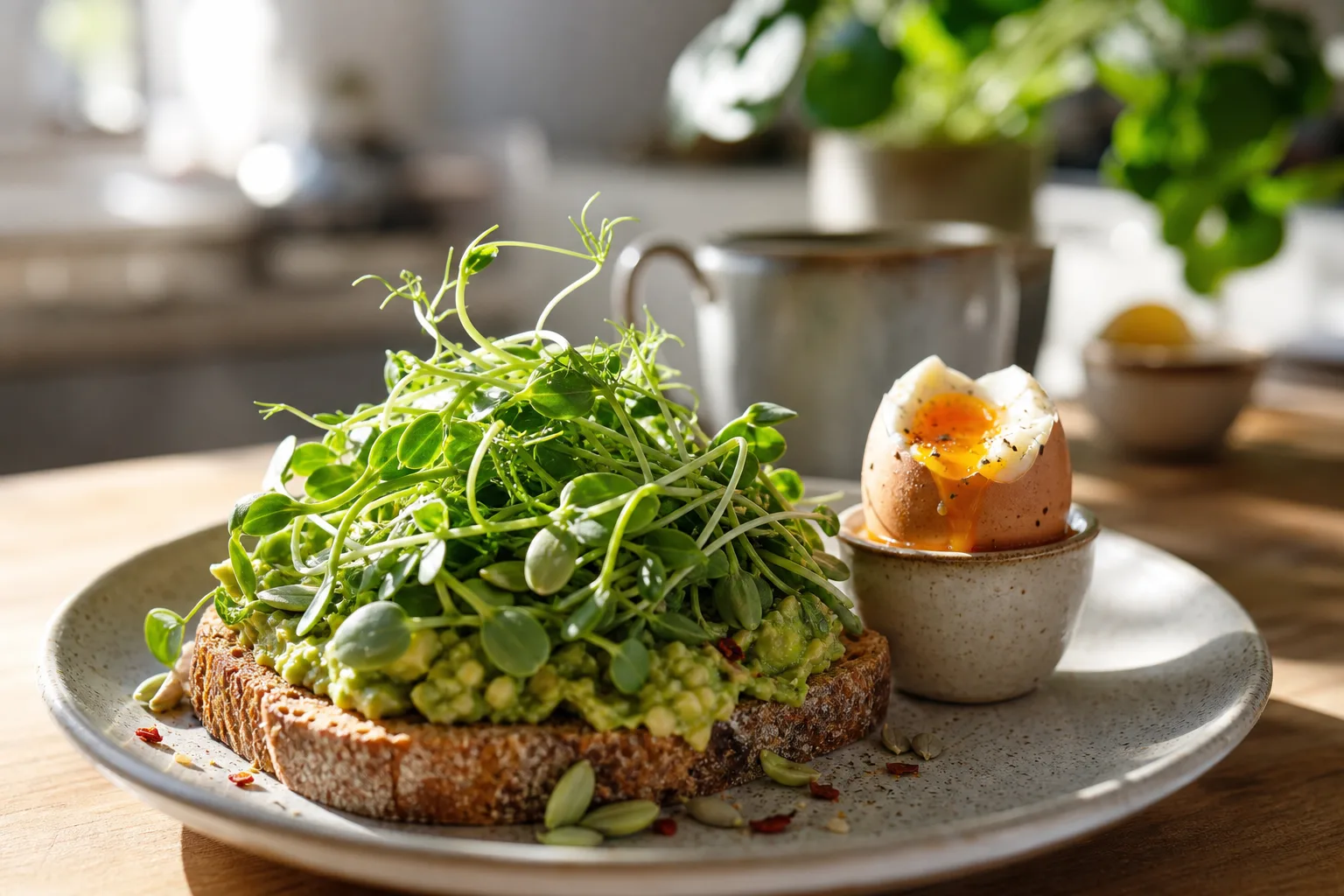
- Pile them on toast. Avocado or cream cheese toast with a thick layer of sunflower shoots is a genuine meal, and the crunch makes it feel finished.
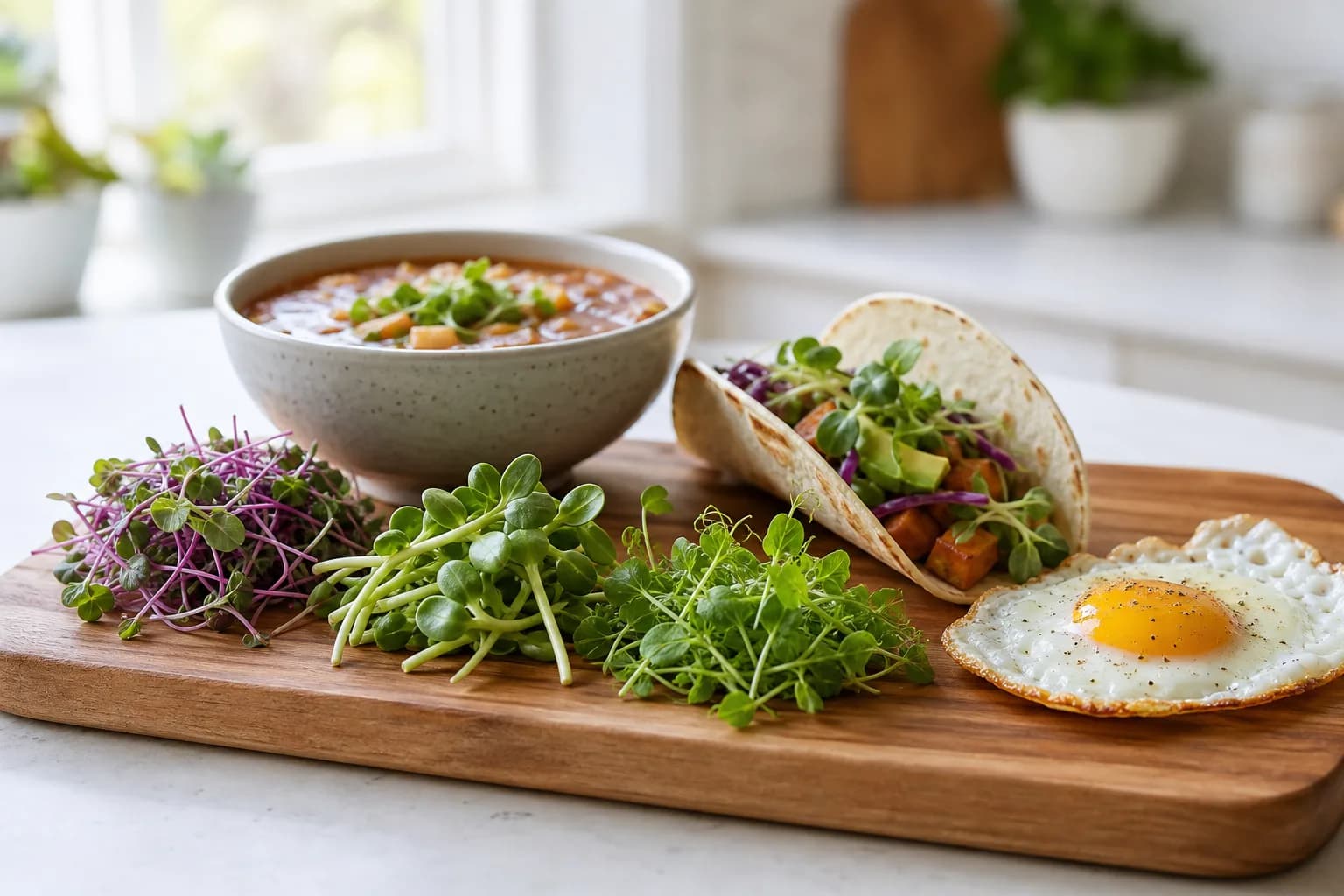
- Stir pea shoots into hot dishes at the end. A quick toss into fried rice, noodles, or soup right before serving keeps them bright and sweet—just don't cook them long, since heat softens both flavor and texture.
- Tuck a handful into sandwiches and wraps. They replace lettuce with more flavor, more crunch, and more nutrition.
- Blend into smoothies. Sweet, mild greens vanish into fruit smoothies, which is the ultimate stealth move for picky eaters—see microgreens smoothie recipes.
- Serve them as a snack. Some kids will eat a bowl of pea shoots plain, the way they'd eat sugar snap peas. It's allowed.
For more inspiration, microgreens salad ideas shows how to make these crops the star rather than the garnish, and how to eat microgreens covers the everyday basics.
Getting Them at Peak Crunch
Here's the catch with mild, crunchy greens: their whole appeal is freshness. The snap, the juiciness, the sweet clean flavor—all of it fades fast once the greens have been cut, bagged, trucked, and shelved. A tired clamshell of pea shoots from the store can taste flat and feel limp, which is the quickest way to convince a kid (or yourself) that microgreens "aren't that great."
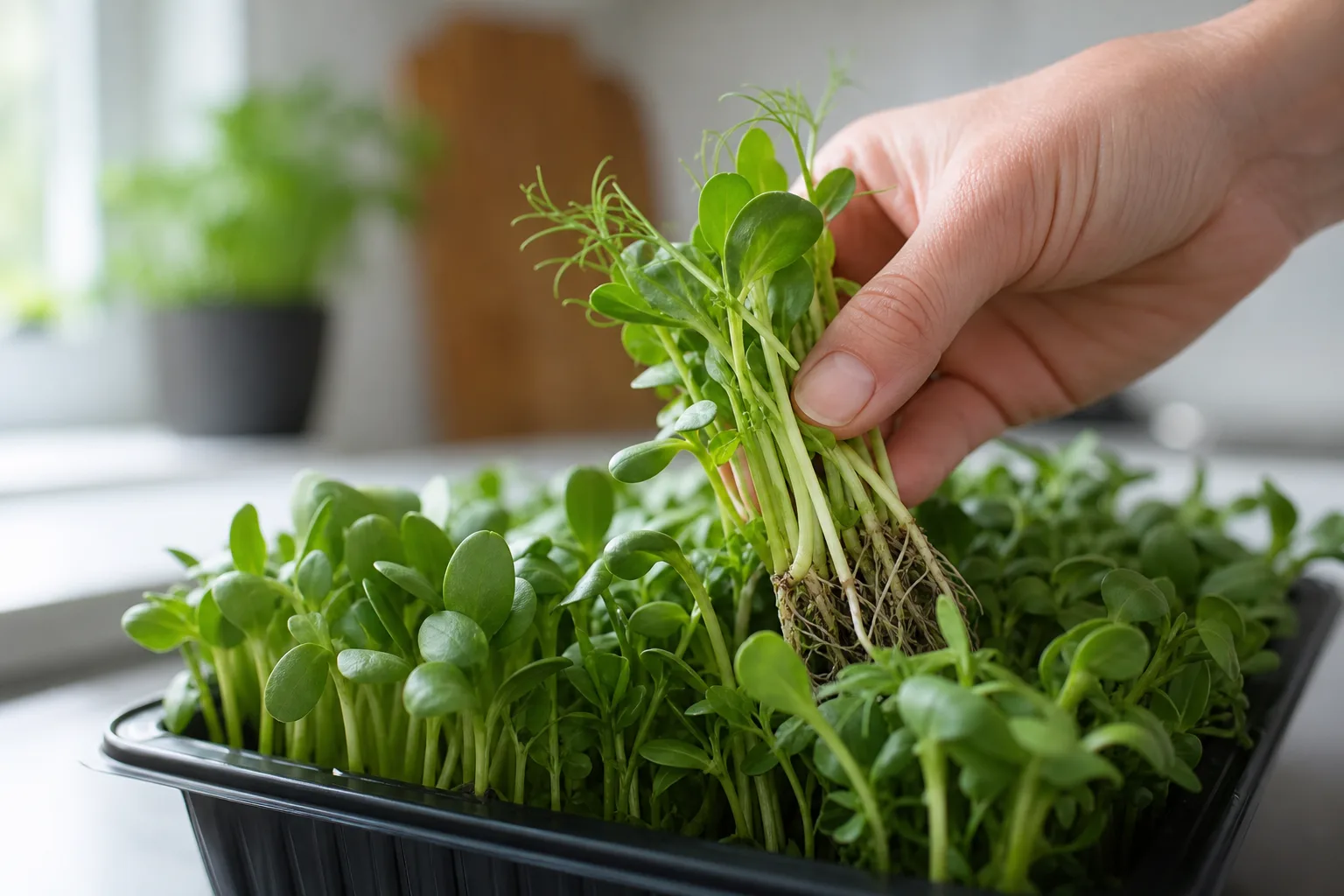
That's the case for growing them where you eat them. Sunflower and pea are so vigorous and forgiving that they're a natural first crop, and harvesting minutes before a meal is when their texture is at its absolute best. A countertop grower like Luya handles the light, water, and timing automatically, so you get that just-snipped crunch on demand without babysitting a tray—a low-stress way to keep the friendliest greens always on hand. If you'd rather start by hand, how to grow microgreens at home walks through the simple version.
The Bottom Line
If you've been hesitant about microgreens—or you're feeding people who are—start in the sweet-and-nutty corner. Sunflower shoots bring hearty crunch and a flavor like fresh seeds; pea shoots bring clean, juicy sweetness that tastes like spring. Neither asks anything of your palate, both are quietly nutritious, and both are about as easy as growing greens gets. Win over a skeptic with these first, and the spicier, bolder crops suddenly look a lot less intimidating.