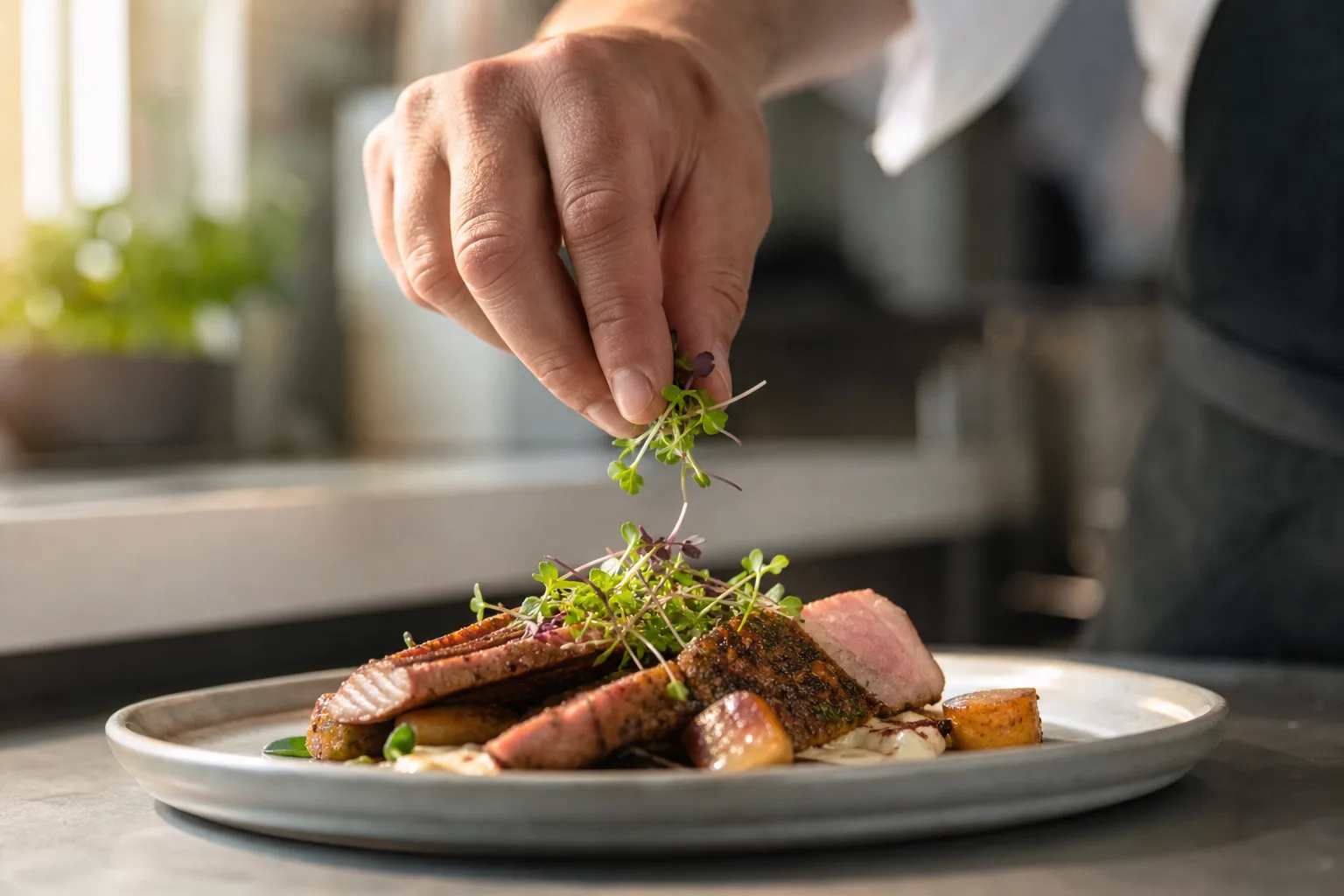
Walk past the refrigerated greens section and you will see two things that look almost like the same product at different ages: tiny, jewel-bright microgreens in a clamshell, and looser piles of baby spinach and baby kale a few shelves over. They are related, and people use the names interchangeably, but on the plate they behave like two different ingredients. One whispers; the other shouts. One disappears into a salad; the other sits on top of a dish and announces itself.
The difference comes down to when the plant is picked. And that single decision, harvest timing, drives almost everything you taste: how loud the flavor is, how tender or substantial the leaf feels, and whether you get a clean bite or a slow build of pepper and bitterness. Here is how to tell them apart, and how to actually use each one.
The Only Real Difference: When the Plant Gets Cut
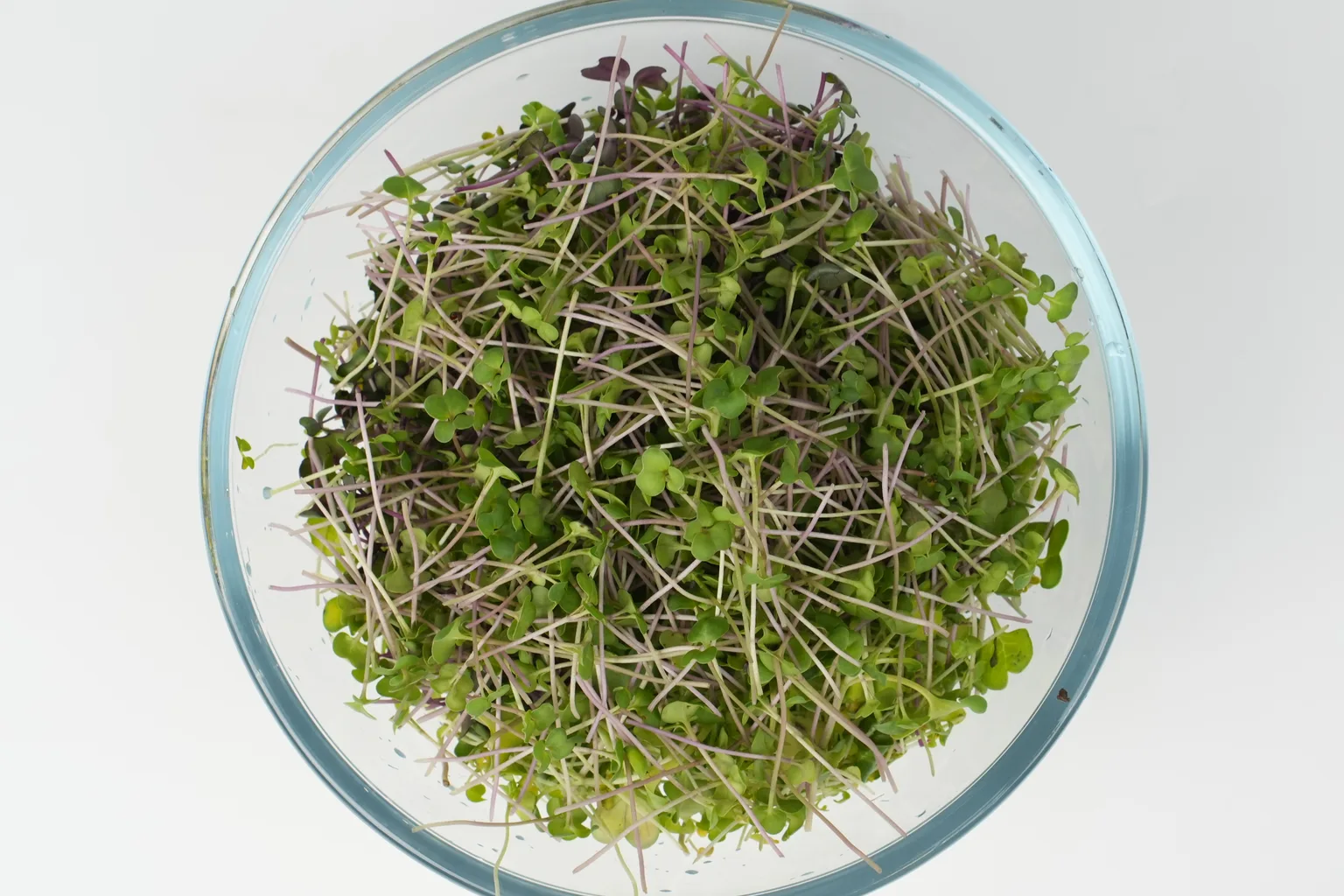
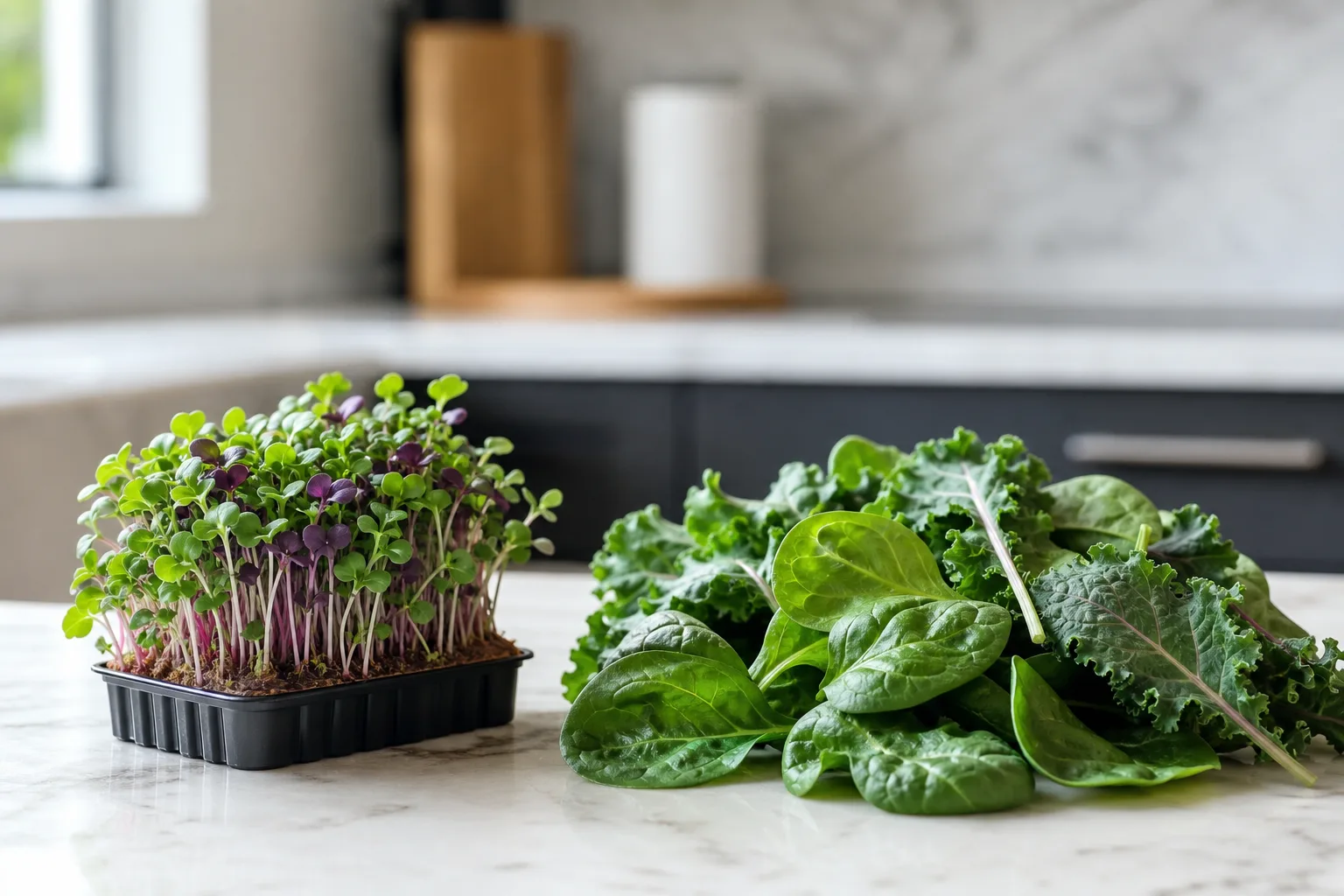
Microgreens are the seedling stage of an edible vegetable, harvested somewhere between roughly 7 and 21 days after the seed germinates, just after the first true leaves appear. Baby greens are the same crops left in the ground longer, usually a few weeks more, and picked while the leaves are young and tender but already recognizable as a small version of the mature plant. A baby spinach leaf looks like a small spinach leaf. A micro broccoli looks like a stem with two tiny seed leaves on top.
That gap of a couple of weeks does a lot. In a young seedling, the plant is pouring its energy into a very small amount of tissue, so flavor compounds, aromatics, and pigments are packed tightly into each gram. As the plant grows into the baby stage, that same chemistry spreads across more leaf and more water, so each bite tastes milder and more diluted. If you want the full primer on the early stage, what are microgreens lays it out, and microgreens vs sprouts clears up the other common mix-up.
| Feature | Microgreens | Baby greens |
|---|---|---|
| Typical harvest age | ~7-21 days | ~25-40 days |
| What you eat | Stem + seed leaves (cotyledons) | Small true leaves |
| Flavor intensity | High, concentrated | Mild, mellow |
| Texture | Delicate to crisp-tender | Soft, leafy, more substantial |
| Best role | Finishing, garnish, accent | Base of a salad, bulk green |
| Holds up to volume? | No, used in small amounts | Yes, eaten by the handful |
Flavor Intensity: Concentrated vs Mellow
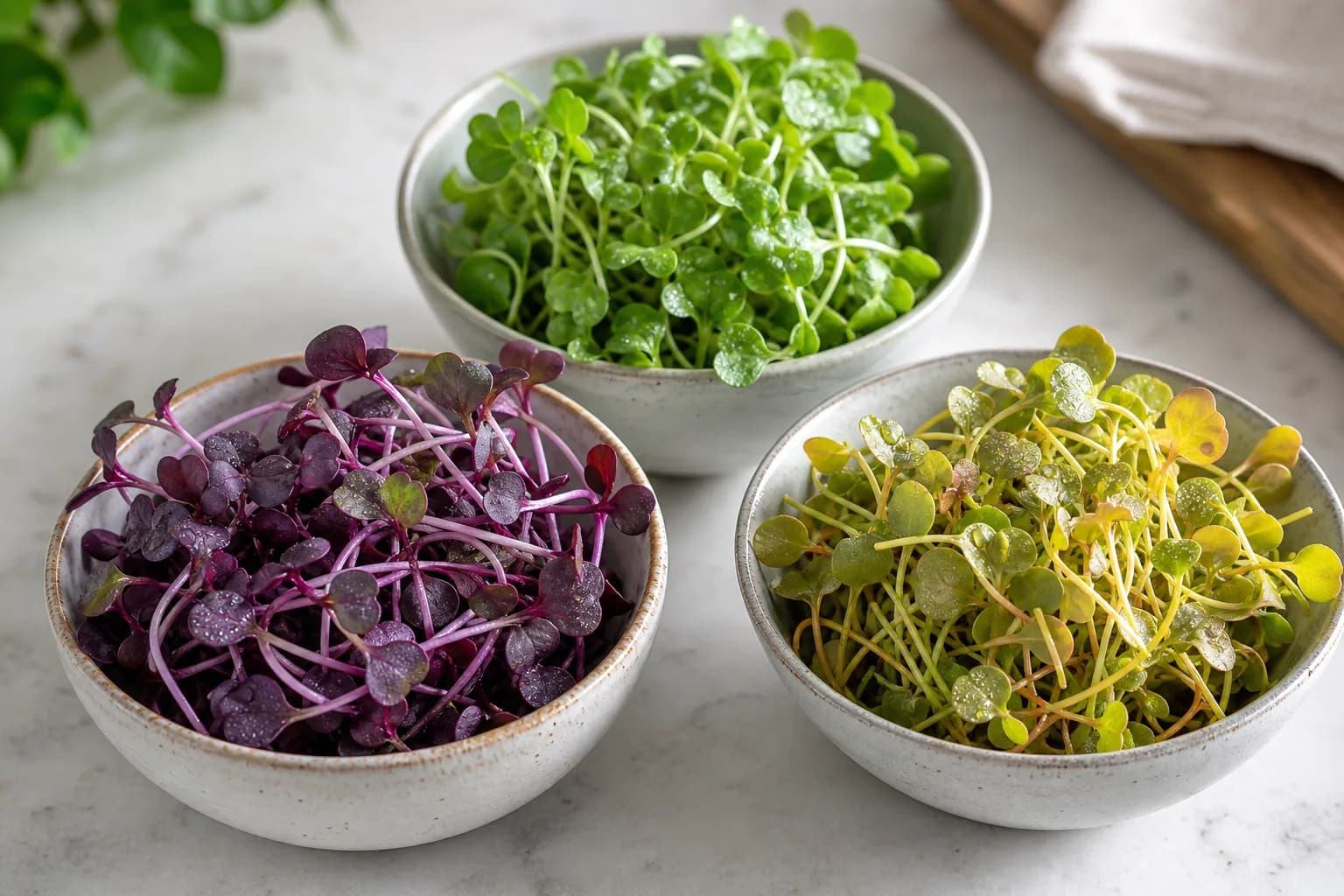
The headline difference is intensity. Because everything is packed into a tiny seedling, microgreens deliver a much bigger flavor hit per gram than the baby version of the same plant. Micro radish tastes sharply of radish. Micro mustard can light up your sinuses. Pea shoots taste like the sweetest part of a fresh garden pea, concentrated.
Baby greens take the opposite approach. Baby spinach and baby kale are deliberately gentle, which is exactly why they are the default bagged salad green: you can eat a large bowl without any one flavor wearing you out. That mildness is a feature, not a flaw. It just means they play a different role.
A useful way to think about it: microgreens are a seasoning that happens to be a vegetable, while baby greens are a vegetable that happens to be mild. In a trained sensory evaluation of a dozen micro and baby greens, tasters consistently sorted samples into distinct flavor camps, with crops like micro broccoli, pea shoots, micro mustard, and micro arugula each landing in their own clearly defined corner of the flavor map. The takeaway for cooks is simple: a small pinch of a microgreen changes a dish, while baby greens build the body of it.
Texture: Delicate Garnish vs Hearty Handful
Texture is where the two part ways most obviously in the mouth. Microgreens are built from a slim stem and a pair of tender seed leaves. Depending on the crop they range from almost melt-in-your-mouth delicate (broccoli, arugula) to juicy and crisp-tender (sunflower, pea shoots, radish). What they are not is sturdy. Pile them high and they wilt, bruise, and collapse under a warm sauce.
Baby greens are made of actual leaves, so they have more structure and chew. A handful of baby kale holds its shape in a bowl, stands up to a vinaigrette for a while, and gives you something to bite into. That is precisely why baby greens make a satisfying salad base and microgreens do not. If you have ever tried to build a full salad out of pure microgreens, you already know it feels thin and disappears fast. For more on the mouthfeel side of the category, our microgreen texture guide goes deeper.
Bitterness and the Slow Burn
Bitterness and pungency are the third axis, and here the differences within microgreens are as interesting as the difference between micro and baby. Brassica microgreens, which include broccoli, kale, mustard, radish, arugula, and cress, carry compounds that read as peppery, sharp, or pleasantly bitter. In the seedling stage those notes are turned up. Micro mustard and a spicy mustard medley bring real heat. Cress and arugula bring a green, peppery bite. You can read more about where that comes from in why do microgreens taste bitter.
Baby kale and baby spinach, by contrast, smooth most of that out. Baby kale keeps a faint earthy bitterness but loses the aggressive edge of its micro cousin, and baby spinach is almost sweet. The chart below sketches roughly how a few common crops compare from mild to bold.
| Crop | Form | Flavor character | Intensity (1-5) |
|---|---|---|---|
| Baby spinach | Baby green | Sweet, soft, earthy | 1 |
| Baby kale | Baby green | Mild, faintly earthy | 2 |
| Pea shoots | Microgreen | Sweet, fresh, grassy | 2 |
| Micro broccoli | Microgreen | Mild, fresh, green | 2 |
| Micro radish | Microgreen | Sharp, peppery | 4 |
| Micro arugula | Microgreen | Peppery, nutty | 4 |
| Micro mustard | Microgreen | Hot, mustardy, sinus-clearing | 5 |
If you are drawn to that peppery, sinus-clearing end of the spectrum, the spicy microgreens guide is worth a look. If you would rather stay sweet and nutty, nutty microgreens like sunflower and pea are the gentler route.
When to Use Each One
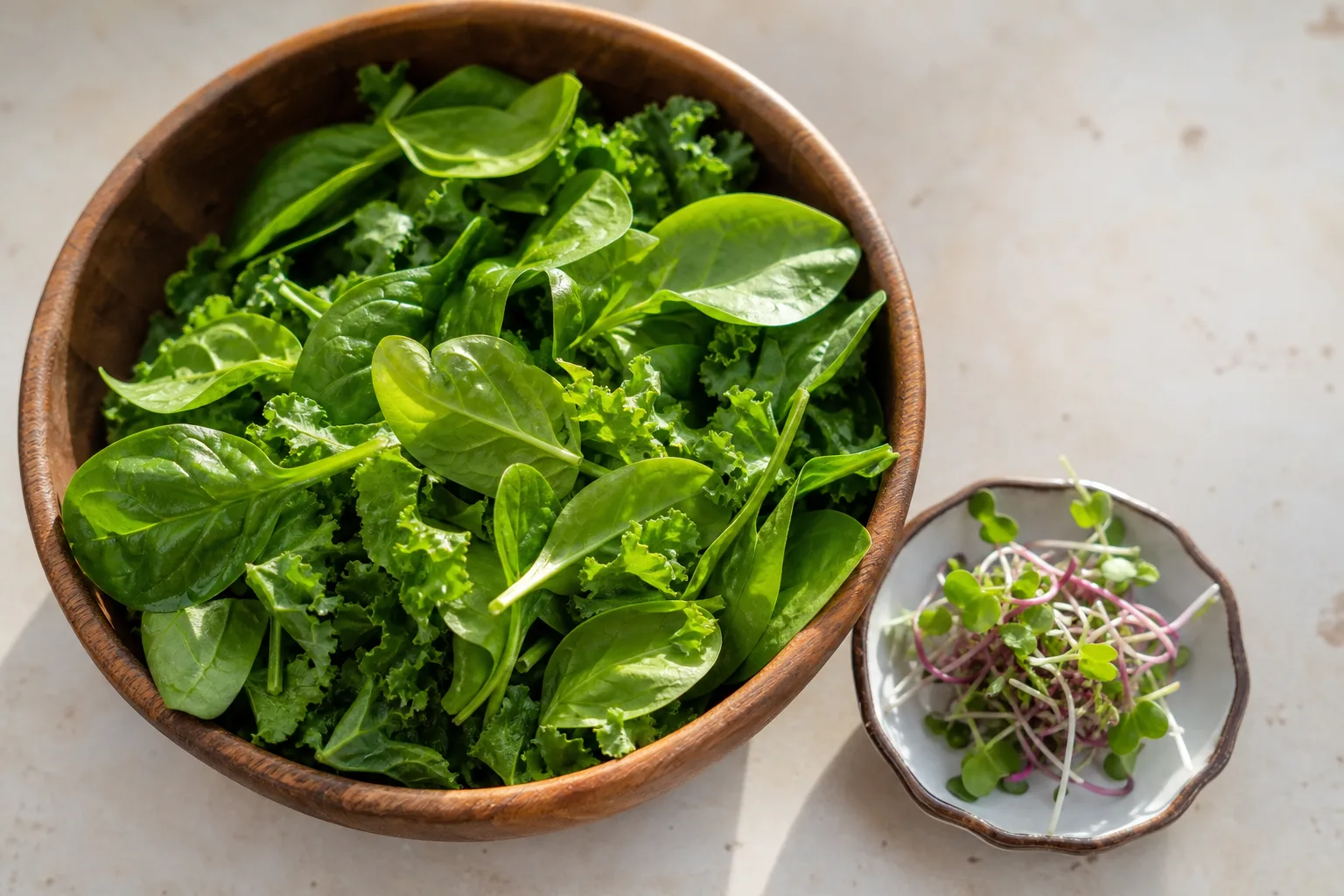
The practical question is not which is better, but which job you are doing. Use baby greens when you need volume: the base of a salad, a bed under grilled fish, a handful wilted into pasta or stirred into a smoothie. They are forgiving, mild, and meant to be eaten in quantity.
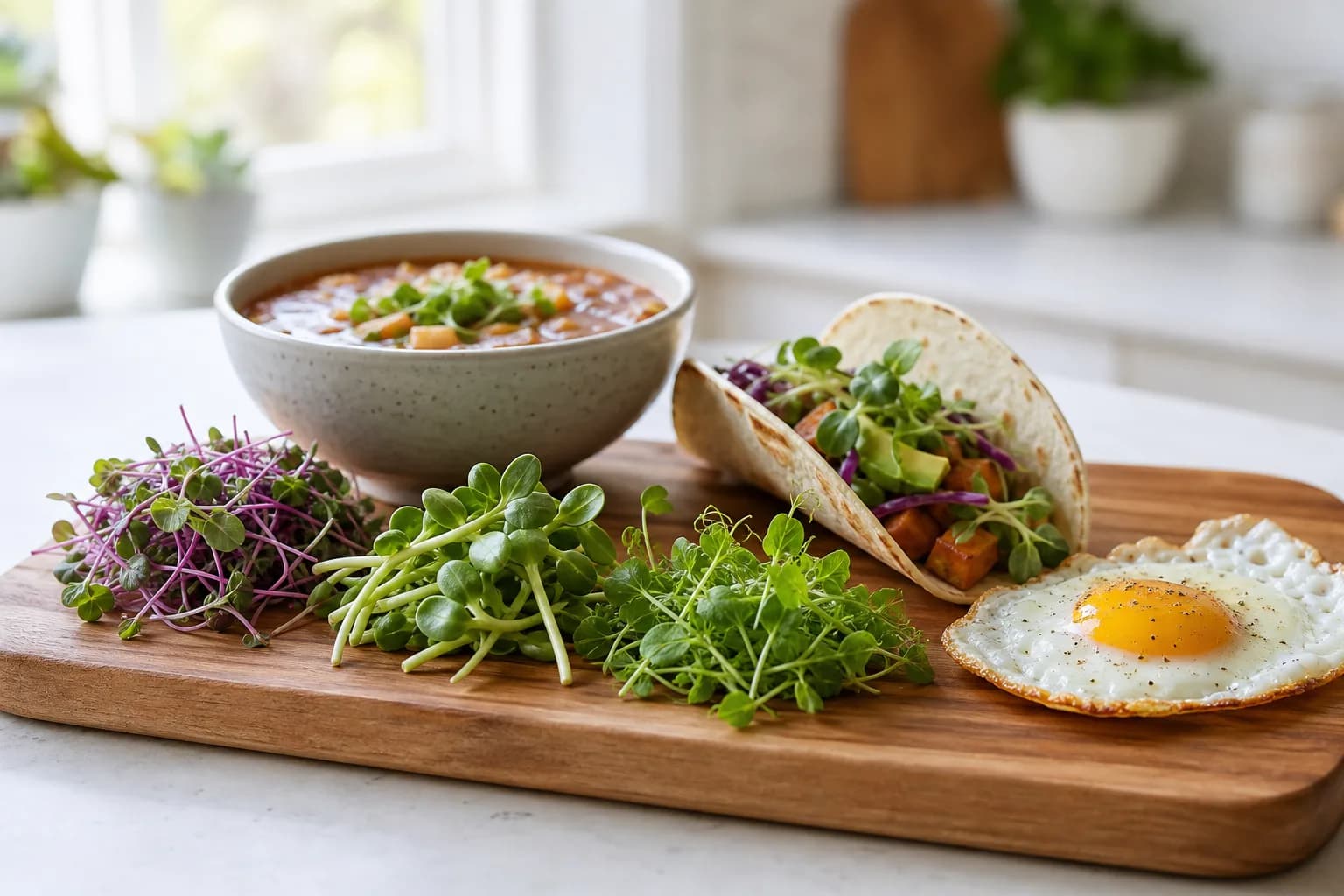
Use microgreens when you want to change the character of a finished dish with a small amount. A pinch of micro radish on a taco, micro arugula over a pizza as it comes out of the oven, pea shoots on avocado toast, micro mustard tucked into a sandwich for a hit of heat. They are a finisher, not a filler. Add them at the very end, off the heat, so the delicate texture and concentrated flavor survive. Our notes on cooking with microgreens and heat explain why timing matters so much.
You can also mix the two. A bowl of baby spinach gives you the bulk and the easy eating; a scattering of micro radish or micro arugula on top gives that same bowl a bright, peppery lift it would never get from baby greens alone. For more ways to combine them, microgreens salad ideas and how to eat microgreens are good starting points.
Why Freshness Decides the Whole Thing
There is a catch that affects microgreens more than baby greens: that intense flavor and delicate texture fade fast once the greens are cut. A clamshell of microgreens that has spent a week in transit and on a shelf has already lost much of the punch that made it worth buying, and the tender leaves are the first thing to turn. Baby greens, being sturdier, hold up a little longer, but they too taste flat after enough time in the bag.
This is the real argument for growing your own, and it is the gap a countertop grower like Luya is built to close. When you snip micro radish or micro mustard minutes before it hits the plate, you get the full, concentrated version of the flavors described above, instead of a tired echo of them. The difference between fresh-cut and week-old microgreens is, frankly, larger than the difference between many micro and baby greens at the store.
The Short Version
Microgreens and baby greens are the same crops caught at different moments. Microgreens are picked young, so they are intense, delicate, and meant to be used in small finishing amounts. Baby greens are picked a bit later, so they are mild, sturdy, and made to be eaten by the handful as the base of a meal. Reach for baby greens when you need a soft, generous bed of greens, and reach for microgreens when you want one small pinch to wake the whole plate up. Knowing which is which, and especially eating them fresh, is the difference between a garnish you forget and a flavor you remember.