You snipped a handful of microgreens, expected a fresh, mild bite, and instead got a sharp, almost medicinal bitterness that lingered on your tongue. It is one of the most common surprises for new growers, and it is easy to assume you did something wrong. Most of the time you didn't. That bitter edge is the plant doing exactly what it evolved to do, and once you understand the chemistry behind it, you can dial it up or down on purpose.
Let's walk through why microgreens turn bitter, which crops are most prone to it, and the practical levers that make the biggest difference.
Bitterness Is a Defense, Not a Defect
Tiny seedlings can't run from threats, so they fight back with chemistry. The compounds that taste bitter, peppery, or sulfurous are mostly the plant's defensive arsenal, a class of molecules scientists call secondary metabolites. Unlike sugars and proteins, these aren't used for basic growth. They are made under specific conditions to deter pests, fight off microbes, and shield the plant from stress.
Two families do most of the heavy lifting on flavor:
- Glucosinolates. Found in the brassica family (broccoli, kale, mustard, radish, arugula, cabbage), these sulfur compounds produce the sharp, peppery, sometimes throat-catching heat. When you chew, an enzyme called myrosinase converts them into the pungent breakdown products you actually taste.
- Phenolics and flavonoids. This broad group, which includes the anthocyanins that give some microgreens their red and purple tints, leans astringent and bitter. Plants ramp these up as antioxidants when they are under light or environmental stress.
Here is the catch worth remembering: many of these same compounds are exactly why microgreens are good for you. The sulfur compounds in broccoli microgreens are precursors to sulforaphane, one of the most studied health compounds in the vegetable world. So a little bitterness is often a sign of a nutrient-dense crop, not a failed one. The goal isn't to eliminate it. It's to keep it in the pleasant range.
The Crop You Chose Matters Most
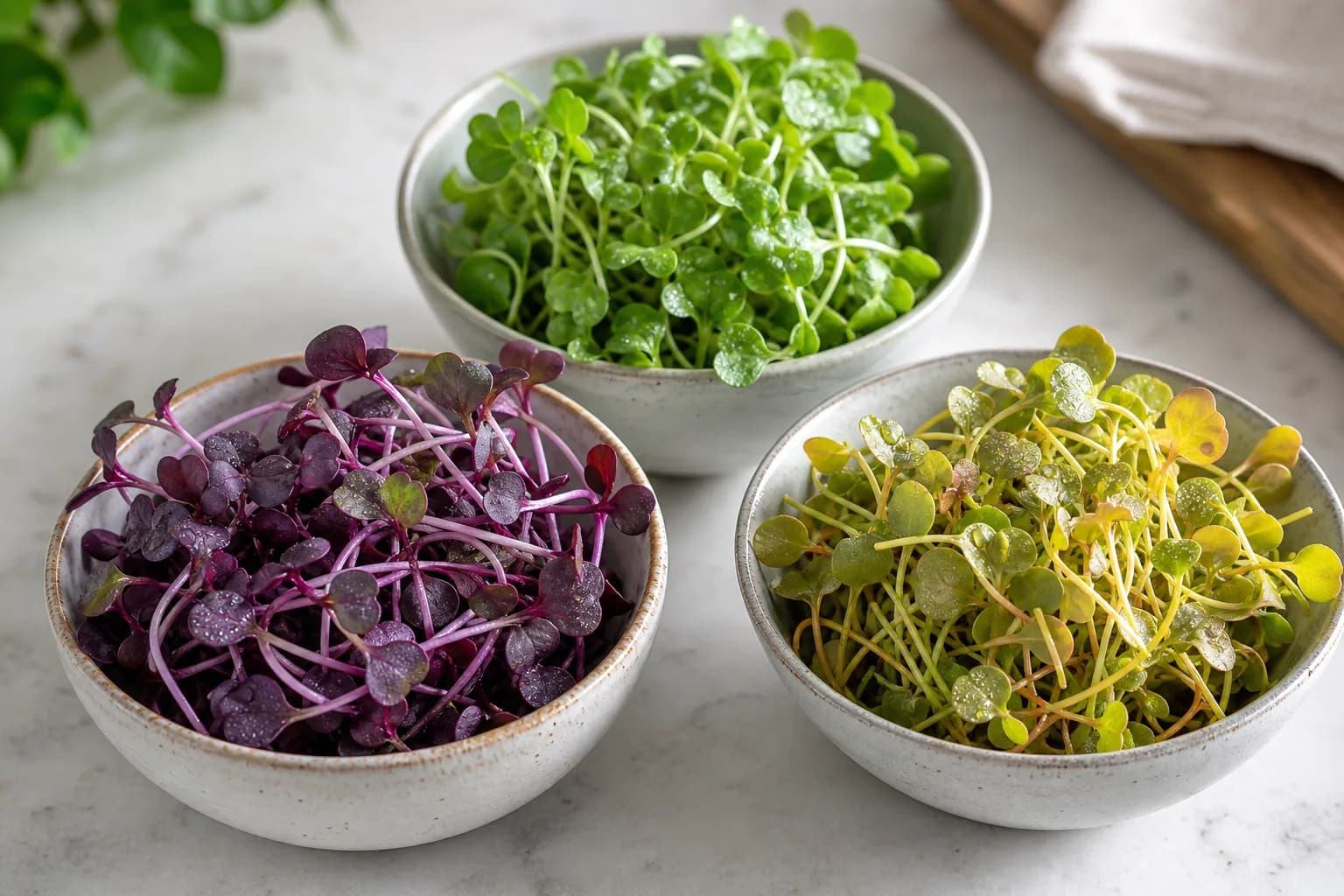
Before you blame your technique, look at what you planted. Sensory panels that taste-test microgreens consistently find that flavor falls into a few distinct camps, and the spread between mild and intense is huge. In one structured tasting of a dozen micro and baby greens, the standout profiles ranged from gentle and sweet to aggressively pungent.
| Microgreen | Typical flavor | Bitterness level |
|---|---|---|
| Pea shoots | Sweet, fresh, grassy | Very low |
| Sunflower | Nutty, mild, crunchy | Very low |
| Broccoli | Mild, fresh, faintly green | Low to medium |
| Radish | Peppery, sharp | Medium to high |
| Arugula | Peppery, nutty, complex | Medium to high |
| Mustard | Hot, sinus-clearing | High |
If you want crowd-pleasing greens, lead with pea shoots and sunflower microgreens. If you planted mustard or radish and find them too intense, that is the variety talking, not a growing mistake. For a fuller map of what each crop tastes like, see our guide to microgreens flavor profiles.
Harvesting Too Late Turns Mild Into Bitter
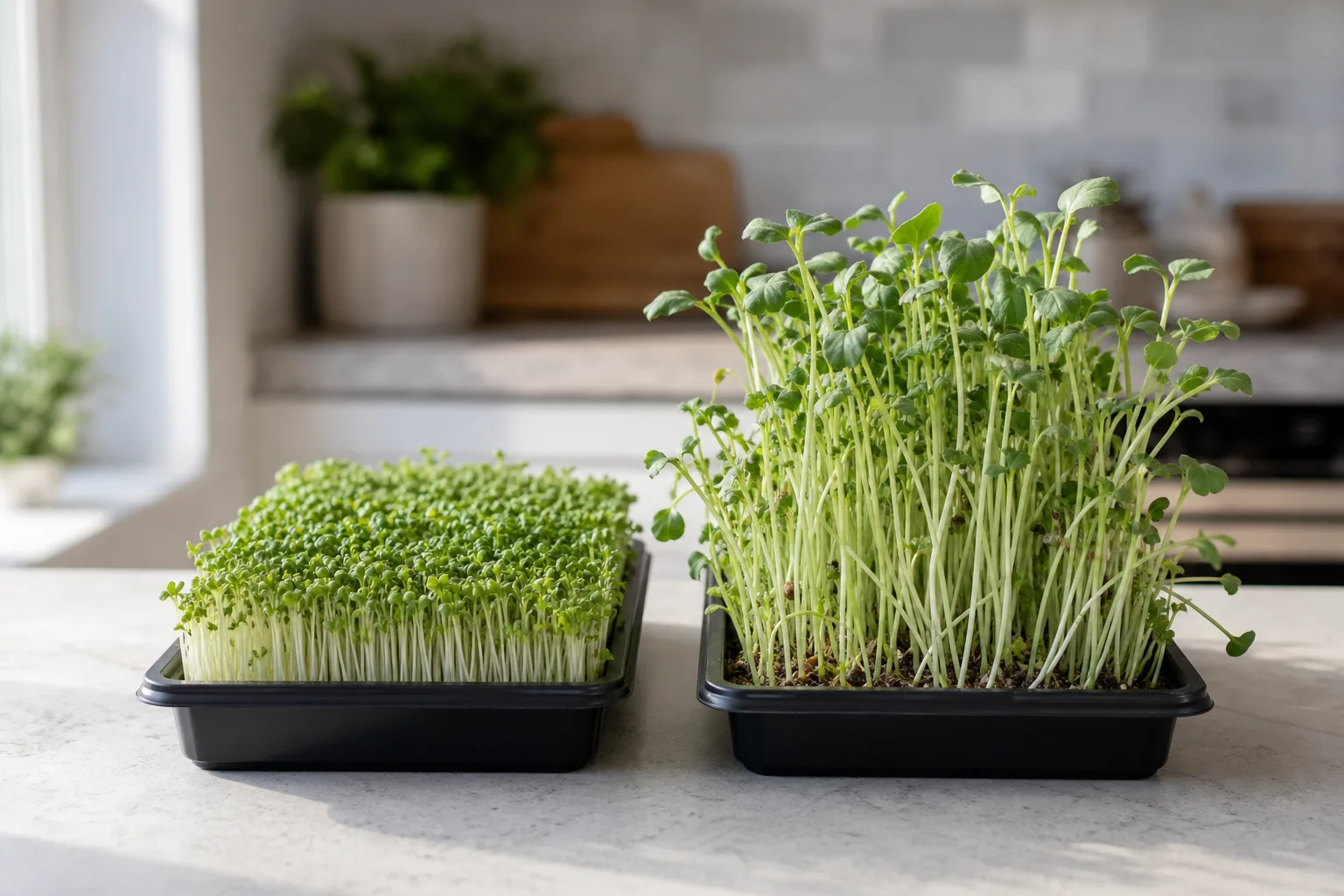
This is the single most common fix-it-yourself cause. Microgreens are meant to be harvested in a narrow window, roughly 7 to 21 days after the seeds sprout, while the plant is still living off its seed reserves and the first leaves (the cotyledons) are doing the work.
Leave them past that window and a few things happen at once. The plant shifts from coasting on stored energy to building structural tissue. The stems toughen, fiber increases, and the true leaves push out. Those true leaves carry a much higher load of defensive compounds than the soft cotyledons do, so flavor sharpens noticeably. A broccoli microgreen that was mild and sweet on day 9 can taste markedly more bitter and fibrous by day 16.
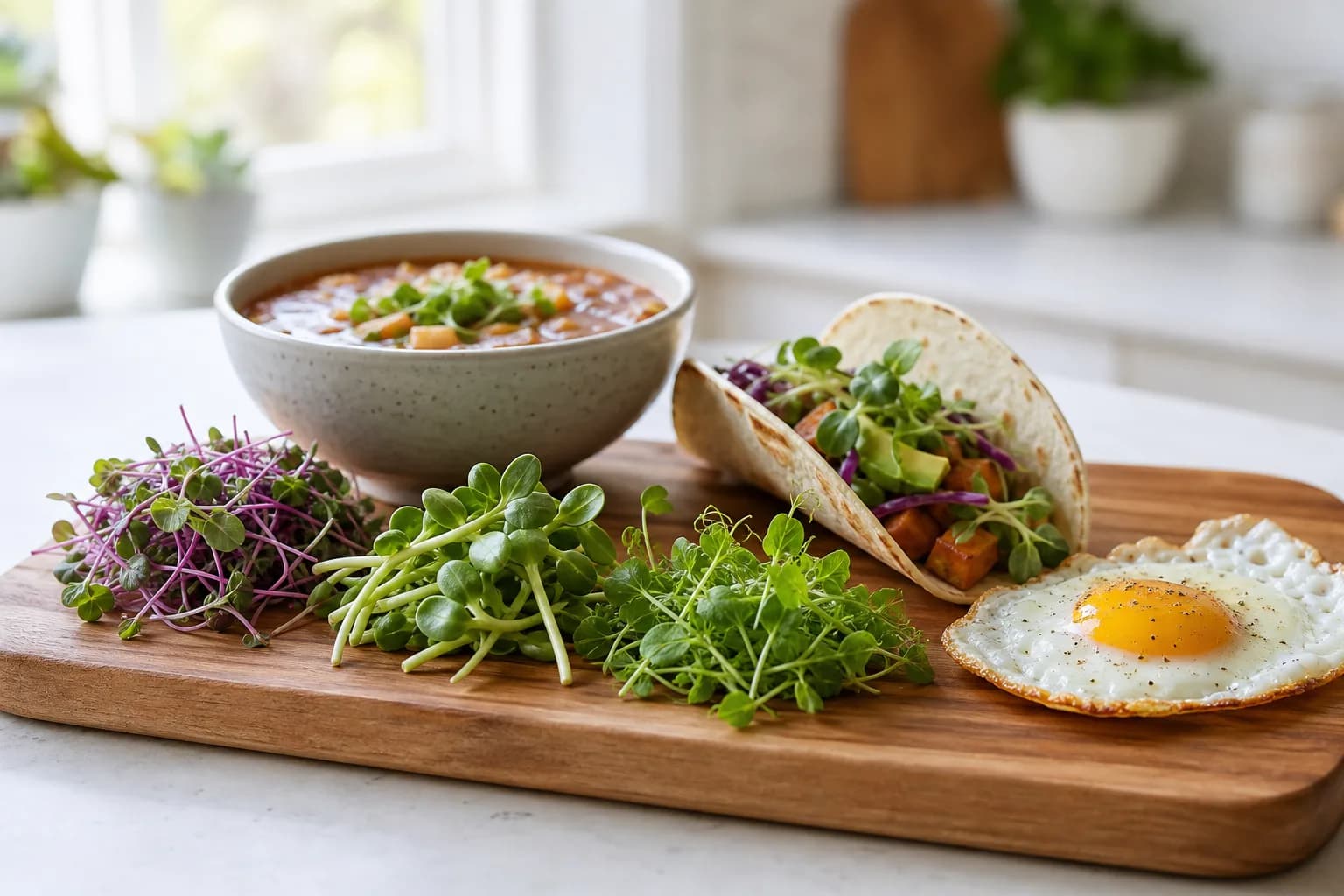
The fix is simple: harvest on time. Most brassicas hit their sweet spot when the cotyledons are fully open and the first true leaf is just beginning to appear, not after. If you have lost track, taste a few before committing to a full cut. When greens go a little too far, a quick rinse in cold water and pairing them with something fatty or sweet, like avocado or a citrus dressing, mellows the edge.
Stress Makes Plants Bitter on Purpose
Everything you do during the grow sends the plant signals about how harsh its environment is, and a stressed plant defends itself by producing more of those bitter, pungent compounds. Common stressors that push flavor toward bitter include:
- Inconsistent watering, especially letting the tray dry out and then flooding it.
- Heat, which speeds metabolism and concentrates flavor.
- Crowding and poor airflow, which stresses seedlings and also invites the mold problems we cover in why microgreens keep molding.
- Nutrient imbalance in the water or growing medium.
The same plant grown calmly versus grown under stress can taste like two different vegetables. This is why store-bought greens are often unpredictable: they may have been pushed hard, shipped, and sat in a fridge for days, which is part of why store-bought microgreens can disappoint on freshness. Steady, gentle conditions are the foundation of mild flavor.
This is also where a controlled setup earns its keep. A countertop grower like Luya holds temperature, watering, and airflow steady day after day, so the plant never gets the stress signals that crank up bitterness. You get consistency that an open tray on a windowsill struggles to match.

Light: The Most Underrated Flavor Dial
Light does far more than feed photosynthesis. The color, brightness, and daily duration of light directly tune how many defensive compounds a plant makes, which means light is one of your most powerful flavor controls.
A few well-documented patterns:
- UV and very bright light raise bitterness. When plants get a strong dose of ultraviolet or intense light, they treat it as stress and respond by pumping out more phenolics, flavonoids, and anthocyanins as built-in sunscreen and antioxidants. Great for nutrient density, but it tilts flavor toward astringent.
- Light quality steers specific compounds. Blue light pushes up flavonoids and phenolics; UV-A has been shown to boost glucosinolate production in brassicas. So spectrum, not just amount, shapes the peppery sulfur notes.
- Day length feeds back into flavor. Because many of these compounds are governed by the plant's internal clock, longer or continuous light periods can raise total phenolics and flavonoids. The same light driving deeper color is often driving sharper taste.
| Light approach | Effect on defensive compounds | Effect on flavor |
|---|---|---|
| Low, gentle intensity | Lower phenolics and flavonoids | Milder, sweeter |
| Moderate, steady light | Balanced | Clean, true to variety |
| High intensity or UV | Higher phenolics, flavonoids, glucosinolates | Sharper, more bitter and pungent |
The practical takeaway: if your greens come out too sharp, easing off light intensity in the last days before harvest tends to soften flavor. If you actually want more punch and color, push light harder. For a deeper look at how spectrum shapes the plant, see light and microgreen nutrition and our breakdown of microgreens, color, and taste.
Putting It All Together: A Sweeter Harvest
If your microgreens taste bitter, run through this short checklist in order:
- Check the variety. Mustard and radish are bitter and peppery by nature. Switch to pea or sunflower if you want mild.
- Harvest earlier. Cut while the cotyledons are open and before the true leaves take over.
- Reduce stress. Keep watering even, temperature moderate, and airflow gentle.
- Adjust light. Dial back intensity in the final days for a softer taste; push it up only if you want more bite and color.
- Mellow at the plate. Cold rinse, then pair bitter greens with fat, acid, or a touch of sweetness.
Bitterness in microgreens is rarely a mistake. It is the plant's chemistry responding to its variety, its age, and the conditions you grew it in. Once you see those as adjustable dials rather than fixed outcomes, you can grow greens that land exactly where your palate wants them, peppery and bold one week, sweet and gentle the next. If you are just getting started, our guides on how to grow microgreens at home and the easiest microgreens to grow are a good next stop.